Battery Knowledge
Home > News > Battery Knowledge > Countdown to Sodium Battery Mass Production! 40% Lower Cost—Can It End Lithium's Dominance by 2026?
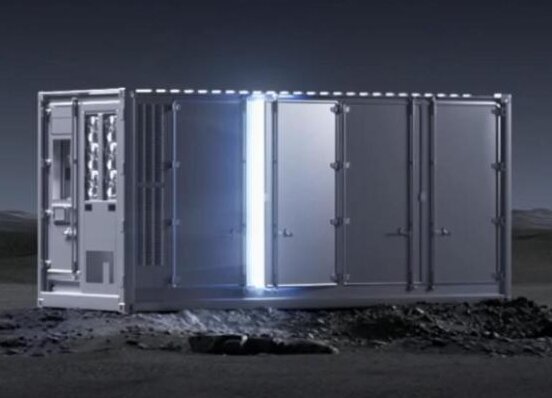
"This year, a series of sodium-ion battery products will achieve large-scale mass production," said Wu Kai, Chief Scientist at CATL, during the "Super Tech Day" in April 2026. This time, no one in the audience dismissed it as just a slogan from a PowerPoint presentation. Two months later, CATL unveiled its Tianheng sodium battery energy storage system in Munich, Germany, announcing that initial deliveries would begin in China in September, with annual shipments reaching gigawatt-hour (GWh) levels. Meanwhile, BYD completed ramp-up of its 30 GWh sodium battery production line in Xining, Qinghai, and the team led by Hu Yongsheng from the Institute of Physics, Chinese Academy of Sciences, achieved a world-first breakthrough in eliminating thermal runaway in ampere-hour-level sodium batteries—a milestone published in Nature Energy.
In 2026, sodium batteries have finally shed their label as “laboratory prototypes.” But a more pressing question now looms: Can their cost and performance truly challenge the dominance of lithium iron phosphate (LFP) batteries?
Countdown to Mass Production: The Crucial Leap from Lab to Factory
Key milestones are rapidly materializing. In April, CATL announced that its new "Na New" brand of sodium-ion batteries would enter large-scale production in the fourth quarter, while also signing a three-year, 60 GWh sodium battery energy storage order with Hibeosun—the largest sodium battery order globally to date. BYD is not far behind; its 30 GWh production line in Xining reached full capacity in July, and sodium battery versions for low-cost models such as the Haiou are already in planning stages. Companies like EVE Energy, Gotion High-tech, and Sunwoda are also catching up, igniting a full-blown race in sodium battery capacity.
Yet behind this mass production lie four major technical hurdles. First is extreme moisture control—sodium batteries' cathode materials and electrolytes are highly sensitive to moisture, which can directly degrade performance. Leading companies have introduced dry-process production lines and fully sealed environments to keep water content at parts-per-million (ppm) levels. Second is gas generation from hard carbon—an issue where severe gas evolution during the first charge often leads to battery swelling. CATL has overcome this persistent problem through optimized electrolyte additive formulations and pre-lithiation technology. Third is matching anode capacity—precise control over the ratio between hard carbon anodes and cathodes is essential. Breakthroughs have been achieved via dual-layer coating and innovative electrode structure designs. Fourth is achieving consistency at scale—from lab-scale grams to factory-scale tons, batch-to-batch material variation and process stability remain major obstacles. CATL has enhanced material structure and manufacturing consistency through advanced technologies, achieving a product yield 10% to 20% higher than industry averages. According to Xu Jinmei, Chief Technology Officer of CATL’s Energy Storage Division, all of the company’s mass production lines are now fully operational and running stably.
The launch of these production lines not only confirms technological maturity but also accelerates the formation of an entire new supply chain. Hard carbon precursors, layered oxide cathodes, aluminum foil current collectors—entirely independent raw material chains are emerging alongside the lithium battery ecosystem.
Cost vs. Performance: Why Sodium Batteries Can Challenge LFP
Price is sodium batteries’ first weapon in market penetration. According to calculations by Northeast Securities, the current total cost of sodium battery cells ranges between 0.33 and 0.42 yuan per watt-hour, compared to approximately 0.33–0.34 yuan for LFP batteries—still not significantly different. However, industry forecasts suggest that as volume scales up in the second half of 2026, material costs will drop, bringing sodium batteries closer to price parity. Morgan Stanley’s June 2026 report concluded that sodium batteries’ core competitiveness lies in their 30% to 40% lower cost, with long-term cell costs expected to fall below 0.4 yuan/Wh—and potentially even reach 0.2–0.3 yuan/Wh.
The source of this cost advantage is clear: Sodium ranks sixth in crustal abundance, with China’s self-sufficiency rate approaching 100%, making it completely immune to overseas mineral supply bottlenecks. Both the anode and cathode of sodium batteries can use aluminum foil, eliminating the need for expensive copper foil commonly used in lithium battery anodes. Moreover, sodium batteries are compatible with existing lithium battery production equipment and processes, requiring less than 5% of total investment to retrofit.
In terms of performance parameters, sodium batteries' competitive advantages run deeper than many expect. In energy density, mainstream products have already reached 160–180 Wh/kg—on par with lithium iron phosphate (LFP) batteries at 140–160 Wh/kg, while leading companies have even surpassed 190 Wh/kg. Their low-temperature performance is particularly outstanding: capacity retention remains above 90% at -40°C, compared to just 50–60% for LFP batteries under the same conditions—a key reason why electric vehicle range drops sharply in northern winters. Regarding cycle life, sodium batteries have exceeded 15,000 cycles, far surpassing LFP’s 3,000–5,000 cycles. This suggests that in energy storage applications, sodium batteries may ultimately outperform lithium batteries in lifecycle economics.
However, shortcomings remain evident. Sodium batteries’ theoretical energy density ceiling is lower than that of ternary lithium batteries, and fast-charging capability is still being optimized—current mainstream rates hover around 1C, while lithium batteries typically exceed 3C. Sodium batteries won’t fully replace lithium batteries; instead, they will precisely complement them in specific applications: energy storage and automotive batteries in cold northern regions, mission-critical backup power for data centers demanding high safety, and long-duration energy storage requiring ultra-long cycle life—areas where lithium batteries fall short.
Market Disruption and Industry Restructuring: A New Lithium-Sodium Coexistence Ecosystem Is Emerging
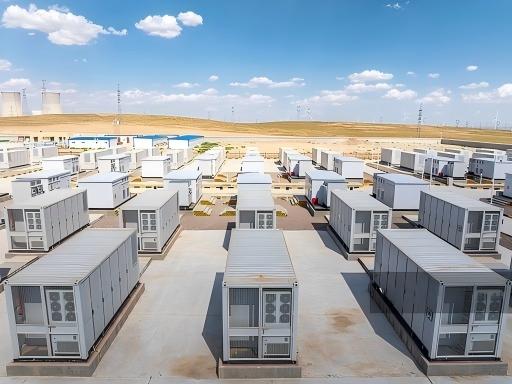
The priority application areas for sodium batteries are now clear. Energy storage leads the way—storage systems on the power generation and grid sides are less sensitive to energy density but demand extreme safety and longevity. CATL’s Tianheng sodium-ion energy storage system offers a lifespan of up to 20 years and features a “one shell, dual cores” modular design, matching lithium battery dimensions so customers can seamlessly switch. According to the "2026 Global Sodium Battery Industry White Paper" released by Qidian Research Institute, sodium batteries could account for 50% of the energy storage market by 2026.
Two-wheeled electric vehicles represent the second major growth point. In July 2026, leading brands such as Yadea and Tailling launched mass-produced sodium-ion models, transforming the two-wheel battery market from a “lead-acid and lithium duopoly” into a “lead-acid, lithium, and sodium triopoly.” Micro EVs (A00 segment) are also accelerating adoption—models like Chery iCar and Wuling Hongguang MINI EV have already planned sodium-ion versions. In start-stop battery applications, automotive 12V stop-start batteries require exceptional low-temperature performance, which sodium batteries naturally meet. For commercial logistics vehicles, Morgan Stanley reports that nearly half of China’s light-duty commercial vehicles operate in cold northern regions, where lithium batteries suffer severe winter range degradation—making sodium batteries ideal for significantly shortening payback periods.
This shift poses structural challenges to the lithium battery supply chain. Lithium carbonate prices will face sustained downward pressure—Morgan Stanley estimates that by 2030, sodium batteries will reduce lithium carbonate demand by approximately 160,000 tons. Lithium battery manufacturers are adjusting strategies: giants like CATL and BYD have adopted a “dual-track” approach, integrating sodium battery production lines alongside lithium ones. The supply chain itself is reshaping, with new material chains—including hard carbon, layered oxides, and aluminum foil—rapidly emerging.
Yet this is not a zero-sum battle. More accurately, lithium batteries will focus on premium passenger vehicles and consumer electronics, while sodium batteries will dominate mass-market segments including energy storage, two-wheelers, micro EVs, and base station backups. A “lithium-sodium complementary” energy ecosystem is taking shape. As CATL stated during its launch event, the seamless compatibility and flexibility between lithium and sodium batteries offer the ultimate solution to managing lithium price volatility.
From laboratory breakthroughs in “thermal runaway-free” technology to GWh-scale mass production lines, sodium batteries have completed their journey from concept to industrial reality in just five years. They reduce reliance on rare metals for energy storage, turning the dream of “ultra-safe, ultra-affordable” batteries into reality. While lithium prices are still fluctuating around 190,000 yuan per ton, sodium batteries have already kicked off this cost revolution—so which electrical device in your daily life do you think they will replace first?