Battery Knowledge
Home > News > Battery Knowledge > Is the safety of sodium batteries really higher than that of the current mainstream lithium batteries?
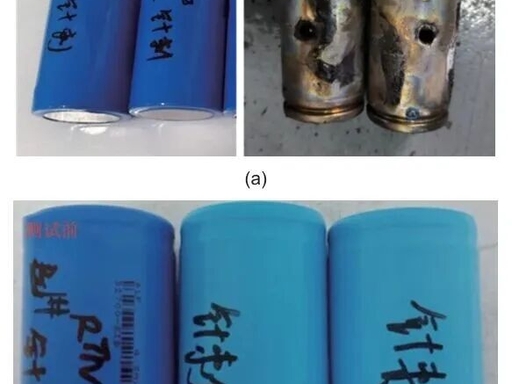
In 2026, several leading battery enterprises will start large-scale production of sodium batteries. Their safety performance, demonstrated in extreme tests such as puncture, compression, and drill-through, shows a fire-free and explosion-free characteristic, which is significantly superior to the current mainstream lithium cobalt oxide and lithium iron phosphate batteries.
I. The Core Source of Sodium Battery Safety Advantages
The safety of sodium batteries is rooted in the electrochemical properties of sodium. The internal resistance of sodium-ion batteries is higher than that of lithium-ion batteries, which means that in the event of a short circuit, the instantaneous heat generation of the battery is less, and the temperature rise is lower, naturally compressing the risk of thermal runaway. At the same time, the positive electrode material of sodium batteries has stronger thermal stability and can withstand higher temperatures without decomposition, which is the underlying guarantee of its safety.
II. Actual Performance Under Extreme Tests
1. The "Violent" Test Results of CATL Sodium Batteries
After destructive tests such as electric drill penetration and battery sawing, the battery still does not catch fire or smoke.
Multiple compressions, puncture tests, etc., which are traditional strict tests, were also passed, and there was no explosion.
During the thermal runaway process, the surface temperature of the cell was controlled at around 200°C, which was about 60% lower than that of lithium-ion batteries.
2. Verification Data from Other Manufacturers
The sodium battery specifically for energy storage of BYD also emphasizes "high safety", with a cycle life exceeding 10,000 times.
The wide temperature range sodium battery released by Weiko Technology also highlights "high safety" as its core selling point, covering all scenarios of high cold and high heat.
III. Comparison of Safety with Mainstream Lithium Batteries Battery type
Risk of thermal runaway
Typical safety test performance
Transport safety
Lithium-ion batteries with three elements have a high risk of catching fire and exploding, and they may smoke and catch fire after being punctured. They require special packaging.
Lithium iron phosphate batteries have an average risk, and they are relatively controllable. After being punctured, their temperature rise is controllable, but there is still a risk and it is limited.
Sodium batteries have a low risk and are inherently safe. When punctured, drilled through, or sawn, they do not catch fire. They can be transported at 0V and have no risk of fire.
Sodium batteries have a unique advantage in the transportation process: they can be transported and stored at zero power, completely eliminating the risk of short circuits and fires during transportation. Lithium batteries cannot achieve this.
VII. The "Cost" Behind Safety
Higher safety comes at a cost. The current energy density limit of sodium batteries (mainstream 140-175Wh/kg) is still lower than that of lithium iron phosphate (160-200Wh/kg) and lithium-ion (250+Wh/kg). This leads to a compromise in range when the same weight or volume is used. Therefore, the improvement in safety comes at the expense of a certain range reduction at this stage.
VIII. Implementation Scenarios of Safety Advantages
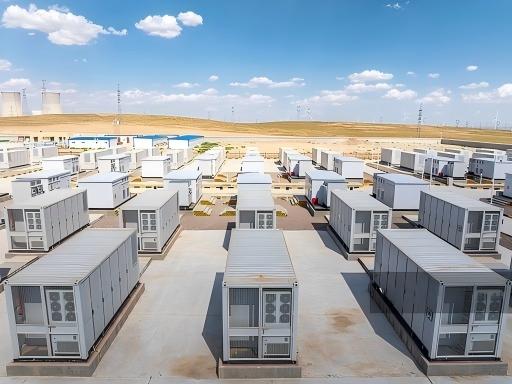
Thanks to its inherent safety, sodium batteries are rapidly being implemented in the following areas: - Vehicles in extremely cold regions: They can maintain over 90% capacity even at -40℃, and their safety remains even at low temperatures. - Two-wheeled electric vehicles: They replace lead-acid batteries, are safe and long-lasting. For example, the world's first sodium battery electric bicycle has a capacity of 93% within the range of -20℃ to 55℃. - A00-level commuting vehicles: The sodium battery version of Changan Qiuran has a range of over 400km, with low cost and safety. - Large-scale energy storage: The Ningde Timeheng sodium battery energy storage system has a cycle life of over 15,000 times, reduced gas production during thermal runaway by 35%, and an increased critical SOC limit for overcharge by 140%.
IX. Conclusion
The safety of sodium batteries is indeed higher than that of the current mainstream lithium batteries. This is not an exaggeration. From the electrochemical essence to extreme test verification, and to the deployed commercial product data, it all points to the same conclusion: The risk of thermal runaway of sodium batteries is much lower than that of lithium-ion and lithium iron phosphate batteries. However, the improvement in safety is not a free lunch. The upper limit of energy density determines that it is currently more suitable for scenarios with lower requirements for range. Sodium batteries and lithium batteries are not substitutes but complementary combinations - lithium-ion batteries cover long-range requirements with high energy density, while sodium batteries cover energy storage, short-distance commuting, and vehicles in extreme environments, which is the most reasonable path for the evolution of future new energy technologies.