Home > Products > Battery Cells > Pouch cells


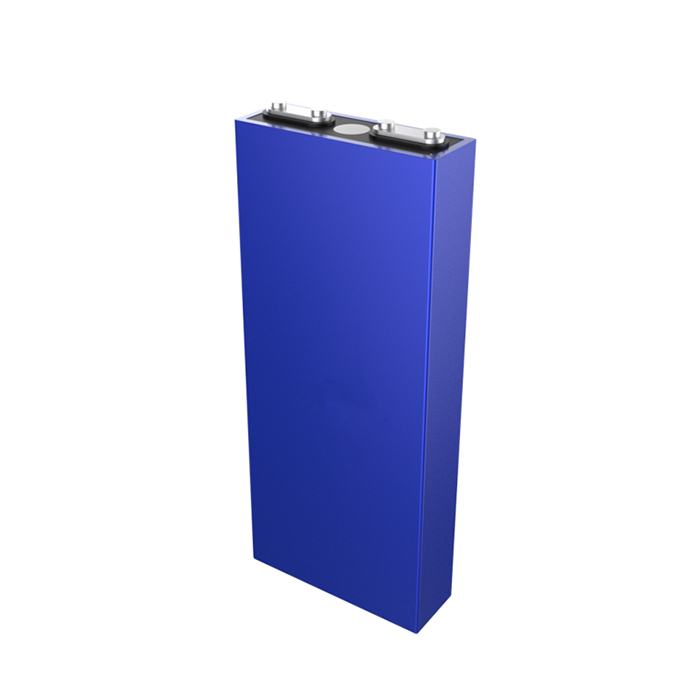
The pouch cell has higher energy density with the same weight, and lower inner resistance and more reliable performance. As per difference discharge C-rate,it is wildly applied in the field of EV, HEV, Racing Motorcycle and Jump starters.
MateLion focuses on high quality LFP pouch cells with discharge C-rate of 1C, 3C and 70C. The 1C-3C cells are used for EV&HEV,while the 70C cell is used for Racing motorcycle and Jump starters and any applications that require explosive power and instant powerful output.
Product Description
LiFePO4 pouch cells are advanced lithium iron phosphate battery cells designed for applications that require high safety, long cycle life, and stable performance. Compared with conventional lithium-ion battery chemistries, LiFePO4 technology offers excellent thermal stability, structural reliability, and dependable performance for industrial and commercial power systems.
As a professional LiFePO4 pouch cells supplier, MateLion provides lithium iron phosphate pouch cells for energy storage systems, electric vehicles, backup power solutions, and industrial equipment. With lightweight aluminum-plastic film packaging and flexible cell configurations, these batteries support a wide range of battery pack designs and application requirements.
LiFePO4 pouch cells use lithium iron phosphate (LFP) as the cathode material and aluminum-plastic film as the outer packaging. This construction combines the inherent thermal stability of LiFePO4 chemistry with the lightweight and flexible design of pouch cells, making them suitable for applications that prioritize safety, service life, and space-efficient battery integration.
Key characteristics of LiFePO4 pouch cells include thermal stability, long cycle life, lightweight construction, flexible integration, and cobalt-free chemistry. These characteristics make them a practical option for industrial and commercial applications where operational reliability and long-term performance are essential.
LiFePO4 pouch cells offer an energy density of 280–320 Wh/kg, which is over 15% higher than that of traditional cylindrical batteries, according to the specifications provided. Their aluminum-plastic film packaging reduces weight by 40% compared with steel-shell batteries and by 20% compared with aluminum-shell batteries. This lightweight construction helps improve energy storage efficiency per unit of weight or volume while addressing common design challenges associated with battery weight and available space.
Unlike rigid metal-cased cells, pouch cells offer greater flexibility in size and shape. They can be customized according to customer product requirements to accommodate irregular installation spaces and specific structural designs. This flexibility helps reduce unused space and supports the development of lightweight, compact, and space-constrained battery-powered products.
The flexible aluminum-plastic film structure can accommodate internal pressure changes, while multilayer heat-sealing technology is designed to prevent electrolyte leakage. The larger heat-dissipation area also supports thermal management. These design characteristics make LiFePO4 pouch cells suitable for vehicle-grade and industrial applications with demanding safety requirements. Under the specified extreme operating conditions, including overcharging, high temperatures, and vibration, the product's stated safety performance includes zero thermal runaway and no fire or explosion.
LiFePO4 pouch cells feature low internal resistance, ranging from several milliohms to several tens of milliohms, along with low self-discharge. Their cycle life exceeds 1,000 cycles, with remaining capacity of at least 80% under the specified cycle-life conditions. These characteristics help maintain stable battery performance over time and can reduce maintenance and replacement costs in end products.
Pouch cell manufacturing involves fewer processing steps than cylindrical cell production and does not require the same metal-can processing steps. Reduced material waste can improve manufacturing efficiency. During battery pack integration, fewer connection and supporting components may also help reduce integration costs by 10–20%, providing a potential cost advantage for customers developing battery-powered systems.
Specification
| Model No. | Chemistry | Nominal Capacity (AH) | Rated Voltage (V) | Continuous Discharge Current (A) | Continuous Charge Current (A) | Weight (g) | Size (mm) | Cycle Life | DataSheet |
| MATE78134203-20Ah | LiFePO4 | 20 | 3.2 | 1C | 1C | 300 | 7.8x134x203 | 2000 Cycles @1C, 25℃ | |
| MATE93134203-25Ah | LiFePO4 | 25 | 3.2 | 1C | 1C | 480 | 9.3x134x203 | 2000 Cycles @1C, 25℃ | |
| MATE113134203-30Ah | LiFePO4 | 30 | 3.2 | 1C | 1C | 570 | 11.3x134x203 | 2000 Cycles @1C, 25℃ | |
| MATE8156241-30Ah | LiFePO4 | 30 | 3.2 | 3C | 2C | 585 | 8x156x241 | 2500 Cycles @1C, 25℃ | |
| MATE13161227-50Ah | LiFePO4 | 50 | 3.2 | 3C | 1C | 952 | 13x161x227 | 2000 Cycles @1C, 25℃ | |
| MATE15161227-65Ah | LiFePO4 | 65 | 3.2 | 3C | 1C | 1210 | 15x161x227 | 2000 Cycles @1C, 25℃ | |
| MATE4161227-7.5Ah | LiFePO4 | 7.5 | 3.2 | 70C, 10s, 25℃ | 20C, 10s, 25℃ | 4x161x227 |
MateLion LiFePO4 pouch cells are designed for applications that require stable power output, long cycle life, and dependable safety performance. With different discharge-rate configurations and customizable battery pack solutions, these cells can support a range of electric mobility, high-power, industrial, and energy storage applications. The appropriate model depends on the required capacity, discharge rate, operating conditions, and battery pack design.
LiFePO4 pouch cells with 1C–3C discharge capabilities are suitable for selected electric vehicle (EV) and hybrid electric vehicle (HEV) applications, including vehicle start-stop systems and low-voltage auxiliary power systems. Their stable output and lightweight packaging support battery pack integration for applications with demanding reliability and vibration requirements.
For applications requiring high current output over short periods, MateLion offers a high-rate pouch cell rated for 70C discharge pulses under specified test conditions. Potential applications include racing motorcycles, jump starters, and other equipment requiring rapid power delivery. Cell selection should account for pulse duration, operating temperature, and the electrical requirements of the complete system.
Explore our high-power battery applications to learn more about power solutions for demanding operating conditions.
LiFePO4 pouch cells can be considered for residential and commercial energy storage applications where cycle life, safety, and efficient battery pack integration are important. Depending on project requirements, cells can be configured into battery modules with suitable battery management systems (BMS) to support monitoring, protection, and consistent system operation.
Learn more about our energy storage system solutions for residential, commercial, and industrial applications.
For compatible equipment designs, pouch cells can support portable testing instruments, medical devices, industrial robots, and other specialized electronic equipment. Battery selection should consider the required capacity, dimensions, operating temperature, discharge profile, and service-life expectations to ensure compatibility with the end product.
Depending on the required chemistry and electrical specifications, pouch battery designs may also be considered for selected consumer electronics, drones, electric tools, two-wheel electric vehicles, and model aircraft. Our team can help evaluate cell and battery pack requirements according to the intended application and available product configurations.
Different applications require different combinations of capacity, discharge performance, dimensions, thermal management, and battery protection. As a battery manufacturer, MateLion provides customization and engineering support to help customers match pouch cells and battery packs to their product requirements, from initial cell selection to system integration.
For two-wheel electric vehicles, low-speed vehicles, and vehicle auxiliary power applications, MateLion can provide customized pouch cell solutions in the 10–100Ah capacity range according to project requirements.
Cell and battery pack customization: Configure cells and battery packs according to the required capacity, dimensions, voltage, and performance targets.
Series and parallel configurations: Design battery pack configurations to meet specific voltage and capacity requirements.
BMS integration: Support battery management solutions for monitoring voltage, current, and temperature, with appropriate overcurrent and overvoltage protection.
Thermal management: Provide battery pack thermal management design support to help maintain stable operation under specified working conditions.
Technical coordination: Assist with battery pack matching, system debugging, and relevant vehicle certification requirements, including technical support for applicable CCC and UN38.3 requirements.
For residential and industrial and commercial energy storage projects, MateLion provides support for pouch cell selection and modular battery pack integration based on system requirements.
Modular battery integration: Support battery module configuration according to required capacity, voltage, and installation constraints.
BMS and EMS integration: Support battery management system and energy management system integration for charging, discharging, monitoring, and control functions.
Cell consistency screening: Help improve cell matching within a battery module to support consistent performance and expected service life.
System engineering support: Provide solution design assistance and installation guidance according to project specifications.
Integration cost optimization: Evaluate battery architecture and component selection to identify potential opportunities to reduce battery pack integration costs.
Choosing a reliable LiFePO4 pouch cell manufacturer involves more than comparing capacity and discharge rate. Manufacturing consistency, product testing, engineering support, and delivery capability are also important when developing battery-powered products.
MateLion has an R&D team covering material research, cell design, and battery management system development. The company also has a provincial-level engineering technology research center and patents related to pouch batteries. These capabilities support ongoing product development and technical optimization for different application requirements.
MateLion operates automated pouch battery production lines covering key manufacturing stages, from cell processing and assembly to packaging and testing. Production capabilities support customer projects ranging from small-batch trial production to larger-volume supply, with production scheduling based on order specifications and capacity requirements.
MateLion implements a quality control system covering multiple stages of production. According to the company's stated quality process, pouch cells undergo testing that may include overcharge, overdischarge, short-circuit, puncture, drop, and high- and low-temperature evaluations, as applicable to the product and test requirements. The company reports a 100% factory pass rate under its quality acceptance process.
The company's management-system certifications include ISO 9001, ISO 14001, and IATF 16949. Product-related certifications, testing records, and transport documentation, including applicable CE, UL, and UN 38.3 requirements, can be reviewed according to the specific product and target market.
Learn more about our quality assurance system and manufacturing standards.
MateLion provides one-to-one customer support throughout the project lifecycle, from initial requirements assessment and solution design to sample evaluation, battery pack integration, debugging, and after-sales consultation. Free sample testing and long-term technical consultation are available according to project requirements, helping customers evaluate product suitability before moving to larger production orders.
When comparing LiFePO4 pouch cells with batteries based on ternary lithium chemistries, customers should consider the complete application requirements rather than focusing on a single performance metric.
Thermal stability: LiFePO4 chemistry offers strong thermal stability, making it suitable for applications that prioritize battery safety.
Cycle life: LiFePO4 cells can provide long cycle life under specified charging, discharging, and operating conditions.
Safety considerations: LiFePO4 chemistry can reduce certain thermal risks compared with some other lithium-ion chemistries, but appropriate cell selection, BMS protection, and system design remain essential.
Temperature performance: Operating performance depends on the cell design and specified temperature range. The manufacturer's technical data should be reviewed for the intended working environment.
Material composition: LiFePO4 uses a cobalt-free cathode chemistry, which may be relevant to material selection and sourcing considerations.
Compared with many ternary lithium batteries, LiFePO4 cells generally offer lower energy density but are often selected for applications that prioritize thermal stability, cycle life, and long-term reliability. The best choice depends on the required energy density, power output, safety requirements, operating environment, and total system design.
MateLion provides technical support for cell selection and customized battery pack development according to project requirements. Customization may involve capacity, dimensions, battery configuration, BMS integration, and thermal management considerations. The available options depend on the application, technical specifications, and project requirements.
Yes, selected LiFePO4 pouch cell models can support high-discharge applications. MateLion offers different discharge-rate options, including a high-rate model rated for 70C discharge pulses under specified test conditions. Before selecting a cell, customers should confirm the required discharge current, pulse duration, operating temperature, and cooling conditions against the relevant datasheet.
The cycle life of LiFePO4 pouch cells depends on the specific model, charging and discharging conditions, operating temperature, and depth of discharge. MateLion's stated specifications include cycle life exceeding 1,000 cycles with at least 80% remaining capacity under the applicable test conditions. Contact our technical team for model-specific cycle-life data and testing information.
To obtain an accurate quotation, customers should provide the required capacity, nominal voltage, discharge rate, dimensions, intended application, estimated order quantity, and any customization requirements. If you are developing a battery pack, additional information about the configuration, BMS, thermal management, and operating environment can help our team evaluate a suitable solution.
Technical documentation and compliance requirements depend on the selected cell model and target market. Customers can contact MateLion to request applicable datasheets, product testing information, and available certification or transport documentation. Requirements such as CE, UL, and UN 38.3 should be confirmed for the specific product and intended application.
The demand for customized power supplies is continuously growing, especially in high-end energy storage and mobile equipment sectors, where there is a significant gap in the demand for LiFePO4 pouch cells. Our products have passed strict reliability tests and are compatible with the terminal products of many leading customers in various industries.We sincerely invite you to become a strategic partner. We will provide you with competitive prices, flexible customization services, and comprehensive technical support to help you quickly launch products that meet market demands. Whether it's bulk purchasing, customized development, or technical cooperation, we can flexibly adapt to your business model.If you need sample testing, detailed technical parameter manuals, or customized solution quotations, please feel free to contact us at any time!