Home > Products > Battery Cells > 21700 cells
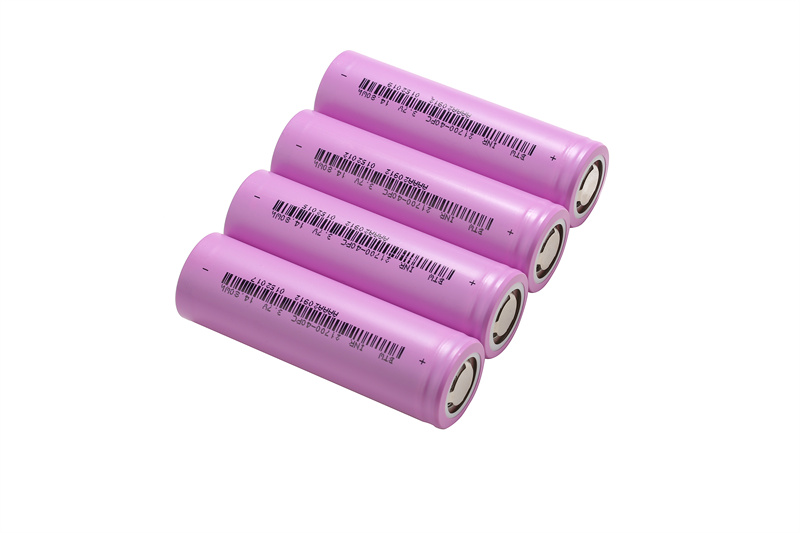
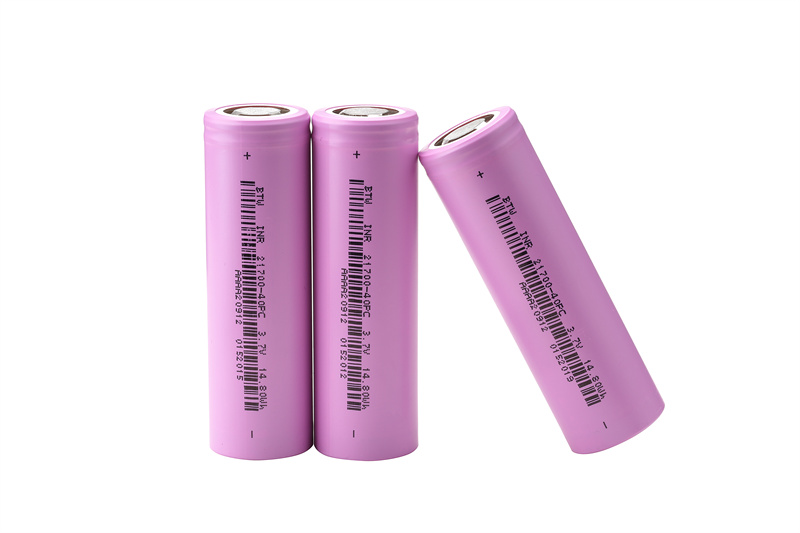
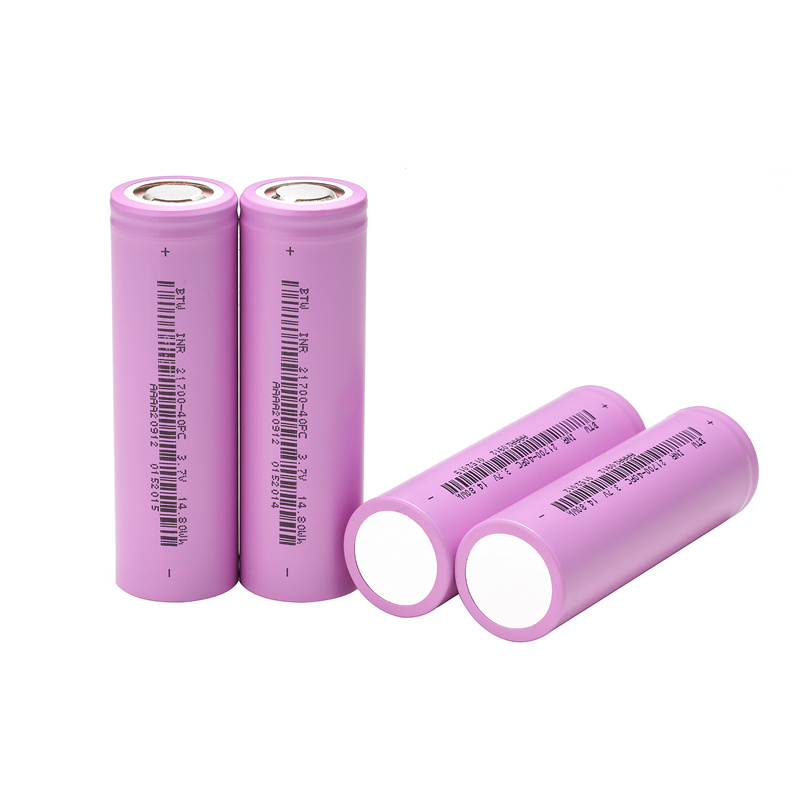
The 21700 cell covers 21700 3.0Ah LiFePO4 cell and 21700 3.0Ah/4.0Ah/4.5Ah/5.0Ah NMC cell with max. discharge current from 2C to 11C. With High Energy Density, the cell can meet various EV applications requiring bigger capacity in limited space, and meanwhile still hold the excellent discharge capability. In terms of quality, it is a powerful competitor to replace existing big brands cells, while in terms of price, it’s a winner. It widely used for E-bikes, E-motorcycles.
Product Description
21700 battery cells are cylindrical rechargeable lithium-ion cells with a standard size of 21mm in diameter and 70mm in length. Designed for battery packs requiring a balance of energy capacity, discharge performance, and space efficiency, 21700 cells are widely used in electric mobility, energy storage systems, power tools, and industrial equipment.
For OEM manufacturers, battery pack assemblers, and industrial buyers, selecting the right 21700 lithium-ion battery cell involves more than comparing nominal capacity. Chemistry, rated voltage, maximum continuous discharge current, charging capability, cell consistency, and compatibility with the battery management system (BMS) all affect the performance and reliability of the finished battery pack.
As a professional Industrial Rechargeable Batteries Cells supplier, Matelion provides 21700 cylindrical lithium battery cells in different capacities and chemistries to meet the requirements of industrial, commercial, and energy storage applications.
When sourcing 21700 rechargeable battery cells for OEM production or battery pack projects, buyers should evaluate the following technical and procurement factors before selecting a model.
Nominal capacity determines the amount of electrical charge a single cell can store, while rated voltage is an important factor in calculating the overall voltage and energy capacity of a battery pack. Buyers should evaluate both specifications according to the required battery pack voltage, runtime, and energy output.
The final pack capacity depends on the number of cells connected in parallel, the battery configuration, and the operating limits of the BMS. Therefore, cell-level capacity should always be evaluated together with the complete battery system design.
For high-power applications such as cordless power tools, electric mobility, and industrial equipment, maximum continuous discharge current is an important selection criterion. The selected cell must support the actual operating current of the equipment without exceeding its specified electrical and thermal limits.
Maximum charge current is equally important when evaluating charging efficiency and compatibility with the charging system. Buyers should compare the cell's charge and discharge ratings with the intended operating profile, charger specifications, and thermal management design.
Different battery chemistries offer different performance characteristics and should be selected according to application requirements.
LiNiCoMn (NMC) 21700 Cells: Suitable for battery pack designs that require a combination of energy density, capacity, and power performance. They can be evaluated for electric mobility, portable power equipment, and other high-performance applications.
LiFePO4 21700 Cells: Suitable for applications where thermal stability, cycle life, and operational safety are important design considerations, including certain energy storage and industrial battery systems.
The final selection should consider operating conditions, required cycle life, discharge characteristics, safety requirements, and total battery system cost.
Cell consistency directly affects battery pack performance, particularly in series and parallel configurations. Differences in capacity, internal resistance, and voltage between individual cells may affect current distribution, balancing requirements, and overall pack reliability.
For battery pack manufacturers, it is important to evaluate capacity grading, internal resistance matching, cell dimensions, connection methods, BMS compatibility, and thermal management requirements before mass production.
For long-term OEM cooperation, buyers should also evaluate the supplier's quality inspection procedures, sample availability, production capacity, batch consistency, and export packaging capabilities.
Before placing a bulk order, it is recommended to confirm the model-specific datasheet, sample testing results, minimum order quantity, production lead time, warranty terms, and applicable transportation documentation.
Specification
| Model No. | Chemistry | Nominal Capacity(mAh) | Rated Voltage(V) | Max.Continuous Discharge Current | Max. Charge Current | Weight(g) | DataSheet |
| MATE21700SP3.0 | LiNiCoMn | 3000 | 3.6 | 10C | 6C | 67 | |
| MATE21700SP4.0 | LiNiCoMn | 4000 | 3.6 | 11C | 6C | 67 | |
| MATE21700MP4.8 | LiNiCoMn | 4800 | 3.6 | 3C | 2.4C | 69 | |
| MATE21700MP5.0 | LiNiCoMn | 5000 | 3.6 | 2C | 2.5C | 69 | |
| MATE21700MP4.5 | LiNiCoMn | 4500 | 3.6 | 3C | 1C | ||
| MATE21700MP3.0 | LiFePO4 | 3000 | 3.2 | 3C | 1.5C | 70 |
Matelion offers multiple 21700 lithium battery cell models with different capacity ratings, charging capabilities, discharge performance, and battery chemistries. Buyers can compare the specifications above to identify suitable cells for their battery pack designs.
MATE21700SP3.0 and MATE21700SP4.0 are suitable candidates for applications requiring higher discharge rates. Their maximum continuous discharge ratings are 10C and 11C, respectively, with a maximum charge current of 6C for both models.
These models can be evaluated for high-power battery packs used in power tools, electric equipment, and other applications with demanding current requirements.
MATE21700MP4.8 and MATE21700MP5.0 provide nominal capacities of 4800mAh and 5000mAh, respectively. They can be considered for battery pack designs where higher single-cell capacity is an important requirement.
Buyers should compare their respective continuous discharge and maximum charge current ratings to ensure compatibility with the intended equipment and charging system.
MATE21700MP4.5 provides a nominal capacity of 4500mAh and a maximum continuous discharge rating of 3C. It can be evaluated for battery applications requiring a combination of capacity and moderate discharge performance.
MATE21700MP3.0 uses LiFePO4 chemistry, with a nominal capacity of 3000mAh and a rated voltage of 3.2V. Its maximum continuous discharge current is 3C, making it an option for battery systems designed around LiFePO4 chemistry.
The final model selection should be verified against the complete datasheet, including electrical performance, operating temperature, charging conditions, and application-specific safety requirements.
Different battery pack manufacturers and OEM customers have different requirements for cell capacity, power output, system voltage, and integration. Matelion supports project-based cell selection and customization discussions to help customers identify suitable 21700 battery cells for their products.
For electric vehicle battery packs, electric motorcycles, and light commercial mobility systems, cell selection should consider energy requirements, continuous discharge current, cell consistency, and thermal management.
We can discuss suitable 21700 cell models according to the target battery pack configuration, including series and parallel arrangements, BMS compatibility, and cooling requirements. The final battery pack design should be validated according to the applicable vehicle safety and performance requirements.
For portable power stations and residential or commercial energy storage systems, 21700 battery cells can be evaluated according to required storage capacity, charging and discharging profiles, system voltage, and operating environment.
Battery pack manufacturers should consider cell chemistry, series and parallel configurations, BMS communication and protection functions, and thermal management when developing energy storage products.
For OEM and ODM projects, customization requirements can be discussed according to the selected cell model and production specifications, including:
Cell model and capacity selection
Battery pack configuration and integration requirements
Terminal and connection configuration
Pack-level BMS and protection requirements
Product labeling and packaging solutions
Sample evaluation and technical parameter confirmation
Before mass production, technical specifications and customization details should be confirmed through sample testing and project evaluation to ensure compatibility with the customer's battery system.
21700 cylindrical lithium battery cells are used in a wide range of rechargeable battery systems. Their suitability depends on the selected cell chemistry, capacity, discharge performance, and the requirements of the finished battery pack.
Used in battery packs for electric vehicles, electric buses, and electric motorcycles, where cell capacity, discharge performance, and pack-level thermal management are important considerations.
Applied in residential, commercial, and industrial energy storage battery packs, including systems designed for solar and wind energy storage. Cell selection depends on the required storage capacity, charging cycles, and system configuration.
Used in cordless drills, electric saws, and other portable industrial equipment requiring rechargeable power sources. High-rate 21700 cells can be evaluated for equipment with higher discharge current requirements.
Suitable for evaluating in battery systems used in automated guided vehicles (AGVs), mobile robots, and industrial automation equipment, where battery size, operating time, and power output affect equipment performance.
Used in portable power stations, professional lighting equipment, and other rechargeable electronic devices requiring compact cylindrical battery cells and reliable power delivery.
Consistent cell quality is essential for battery pack assembly, particularly in applications involving multiple cells connected in series or parallel. Differences in capacity and internal resistance can affect pack balancing, current distribution, and overall battery performance.
Matelion implements quality inspection procedures throughout the production process to help maintain product consistency and reliability.
Incoming materials are inspected according to relevant quality requirements before entering the production process, helping identify potential material defects and maintain production consistency.
Manufacturing processes are monitored to ensure that production operations meet established quality requirements and that potential inconsistencies are identified during production.
Finished battery cells undergo electrical performance inspections and relevant quality checks before shipment to verify that their specifications meet the requirements of the selected product model.
Capacity grading and internal resistance matching are important for battery pack manufacturers. Consistent cell characteristics help improve battery pack balancing and support more stable performance in series and parallel configurations.
For international battery procurement, transportation safety and product compliance are important considerations. Certification and testing requirements vary according to battery chemistry, product configuration, application, and destination market.
Relevant documentation and compliance requirements can be confirmed according to the selected cell model and specific project requirements, including:
UN38.3: Lithium battery transportation safety testing documentation required for applicable shipments.
IEC 62133: Safety requirements for applicable portable sealed secondary cells and batteries.
IEC 62619: Safety requirements for applicable industrial secondary lithium cells and batteries.
UL Standards: Relevant UL testing reports or certification requirements depending on the application and target market.
RoHS and REACH: Environmental compliance documentation where required by the destination market.
Buyers should confirm the availability and validity of the relevant certificates, test reports, and declarations for the exact product model before placing an order.
Lithium battery cells require appropriate packaging and transportation arrangements to prevent short circuits, physical damage, and other risks during storage and shipment.
Matelion provides export packaging arrangements according to product requirements and applicable transportation regulations, including:
Individual cell insulation and short-circuit protection
Protective packaging to reduce vibration and physical damage
UN-certified dangerous goods packaging where required
Customized cartons and pallet packaging for OEM and bulk orders
Available shipping methods, including air freight and sea freight, depend on the battery's transportation classification, packaging requirements, carrier acceptance, and destination regulations. Shipping documents and packaging specifications should be confirmed before dispatch.
For battery pack manufacturers and industrial buyers, a stable supply of qualified cells is essential for production planning and long-term product development.
Matelion supports different procurement stages, from initial sample evaluation to bulk order coordination. Key order details can be confirmed before production to help customers manage their purchasing schedules.
Sample availability and evaluation arrangements
Production capacity and bulk order planning
Product specifications and batch requirements
OEM/ODM packaging coordination
Production lead time and shipment scheduling
For repeat orders, maintaining consistent product specifications and confirming batch requirements are important steps in supporting long-term cooperation.
Selecting the right battery cell is only one part of developing a reliable battery system. Technical coordination during model selection, sample testing, and battery pack integration also plays an important role in reducing development risks.
Matelion provides technical communication and project support covering:
21700 battery cell model selection according to application requirements
Technical datasheet and electrical parameter consultation
Sample testing and performance evaluation
Battery pack configuration and BMS compatibility discussions
Application engineering guidance
Product quality feedback and technical issue analysis
Warranty coverage, capacity retention requirements, cycle-life conditions, and after-sales procedures should be confirmed for the selected model and specified in the relevant quotation or purchase agreement.
Choosing a suitable battery cell supplier requires consideration of product specifications, quality consistency, technical communication, and long-term supply capability.
Matelion provides a range of 21700 cylindrical lithium battery cells for different battery pack requirements, with multiple LiNiCoMn models and LiFePO4 options.
Key advantages for OEM manufacturers and industrial buyers include:
Multiple Cell Specifications: Different capacity and discharge-rate options to support different battery pack designs.
Multiple Battery Chemistries: LiNiCoMn and LiFePO4 options for different application requirements.
Quality Inspection: Production quality control, capacity grading, and internal resistance matching.
OEM/ODM Support: Project-based customization discussions and packaging coordination.
Technical Communication: Assistance with product selection, datasheet evaluation, and battery pack integration requirements.
Export Order Support: Packaging and shipment coordination according to applicable transportation requirements.
The number 21700 refers to the approximate physical dimensions of the cylindrical battery cell: 21mm in diameter and 70mm in length. This format provides a larger cell volume than the commonly used 18650 format and allows manufacturers to develop battery packs with different capacity and power requirements.
The main difference is their physical size. A 21700 cell measures approximately 21mm in diameter and 70mm in length, while an 18650 cell measures approximately 18mm in diameter and 65mm in length.
The larger dimensions of 21700 cells can provide more capacity per cell, depending on chemistry and cell design. However, they are not direct replacements for 18650 cells in existing battery packs. Battery holders, mechanical structures, electrical connections, and BMS configurations may need to be redesigned.
Start by identifying the required capacity, rated voltage, maximum continuous discharge current, maximum charge current, and battery chemistry. Then evaluate the cell's operating temperature, cycle-life requirements, safety conditions, and compatibility with the battery pack design.
For OEM projects, sample testing and datasheet verification are recommended before bulk purchasing.
Yes. 21700 battery cells can be connected in series to increase battery pack voltage or in parallel to increase capacity and current capability. The configuration should be designed according to the required system voltage, capacity, and load characteristics.
Cells should be appropriately matched, and the battery pack should incorporate a compatible BMS and suitable electrical and thermal protection. Different chemistries or cell models should not be mixed without proper engineering validation.
Buyers should request the product datasheet, model-specific electrical specifications, relevant safety and transportation test documentation, and applicable quality inspection records. Depending on the destination market and application, additional certification or environmental compliance documents may also be required.
Selecting the right 21700 battery cell starts with matching its capacity, rated voltage, charging capability, discharge performance, and chemistry to your battery pack requirements.
Whether you are developing an electric mobility battery pack, an energy storage system, or industrial rechargeable equipment, Matelion can help you evaluate suitable 21700 cell models according to your technical and procurement requirements.
Contact our team with your target capacity, required voltage, continuous discharge current, application, estimated order quantity, and customization requirements to discuss suitable models, sample evaluation, and bulk order quotations.