Battery Knowledge
Currently, the domestic sodium-ion battery industry is accelerating both research and development iteration and mass production implementation. Leading power battery and materials companies are rapidly commercializing their technological achievements, advancing capacity construction, and securing orders, marking a pivotal stage in the industry's commercialization.
Recently, companies such as Eve Energy, CATL, and BYD have successively announced production timelines, technical progress, and capacity plans for sodium-ion batteries. Industry insiders believe that with accelerated R&D and mass production efforts, major players in power batteries and materials are actively turning technology into products, building production capacity, and signing orders—ushering in a critical period for commercialization.
Accelerated R&D and Mass Production
In 2026, the pace of sodium-ion battery R&D and mass production has significantly increased. In June, CATL announced it would deliver its first batch of sodium-ion battery energy storage systems to customers by September, aiming for gigawatt-hour-level shipments throughout the year. Recently, CATL signed a strategic cooperation agreement with Haisi on sodium-ion batteries for energy storage, agreeing on a three-year order of 60 GWh, further accelerating industrialization.
On May 29, BYD stated that it is focusing on commercial applications of sodium-ion batteries in two- and three-wheel vehicles, start-stop power supplies, and energy storage. The company has already achieved early industrialization in the energy storage sector. To date, BYD has filed over 230 core patents globally related to sodium-ion technology, 95% of which are invention patents, precisely covering key areas such as high-energy-density cathode materials, electrolyte optimization, and battery system integration.
On May 17, Guoxuan High-Tech launched its sodium-ion battery brand and introduced three standardized products targeting energy storage, low-altitude economy, and light-duty power applications, planning to initiate large-scale production in the fourth quarter of this year.
In April, Eve Energy announced that it had transitioned from the technology validation phase to large-scale commercialization in the sodium-ion battery field. Its independently designed NF155L sodium-ion battery product is now ready for mass production, with bulk deliveries expected to energy storage and light-duty power applications by year-end. A 2 GWh production capacity is scheduled to be completed by 2027.
Upstream core material suppliers are also closely supporting the supply chain. In April, Dengsheng Technology reported that its sodium-ion cathode materials cover the two mainstream technologies—polyanionic and layered oxides—with performance meeting diverse customer requirements. The company maintains close collaboration with numerous domestic and international clients and has already implemented its products in downstream projects including energy storage, start-stop systems, and small-power applications.
Rapid Expansion in Energy Storage
From a product perspective, sodium-ion batteries offer multiple advantages for industrialization. Beyond cost benefits once mass production begins, they excel in safety and exhibit far less capacity and discharge degradation at low temperatures compared to lithium-ion batteries, offering superior environmental adaptability. However, sodium-ion batteries still face notable limitations, particularly lower overall energy density than mainstream lithium batteries, restricting their use in high-end electric vehicles.
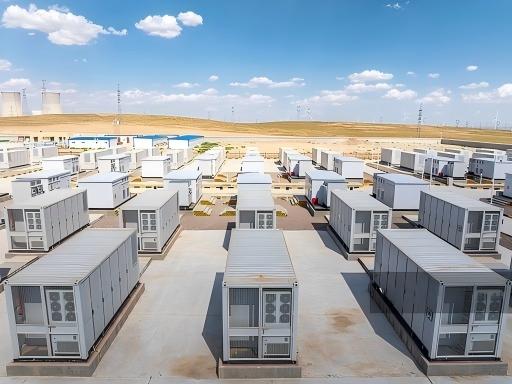
Currently, energy storage remains the primary application area for sodium-ion batteries. In March, a grid-connected sodium-ion energy storage system powered by batteries from Zhongke Haina successfully went online in Yongfu County, Guilin, Guangxi—marking the first large-scale deployment of sodium-ion batteries in Guangxi’s 10 kV medium-voltage distribution network. In January, the first phase of China Power Construction’s Honghu 100 MW/200 MWh sodium-ion battery energy storage demonstration project—the largest under-construction sodium-ion facility in China—passed final acceptance.
According to a report by investment research firm Bernstein, sodium-ion battery shipments doubled last year to 9 GWh, and are projected to reach at least 25 GWh by 2026, with energy storage accounting for over 50% of total demand, followed by micro-mobility and automotive start-stop applications.
A research report from Galaxy Securities indicates that power, energy storage, and two-wheeled vehicles will become the key growth drivers for sodium-ion batteries. In terms of power applications, sodium-ion batteries address key challenges in electrification expansion, and with economic advantages becoming tangible, significant growth is expected in mid-to-low-end power markets. In energy storage, leveraging three major strengths—wide operating temperature range, high safety, and high discharge power—sodium-ion batteries are poised for large-scale deployment. In the two-wheeler sector, thanks to their combined advantages of low cost and high performance, sodium-ion batteries are expected to achieve widespread replacement of lead-acid batteries.
Notably, from a global industrial perspective, China holds an absolute dominant position. According to a report by the International Energy Agency earlier this year, nearly all global sodium-ion manufacturing capacity is currently concentrated in China. Including both already operational and announced production facilities, this share is projected to exceed 95% by 2030.
Sodium-ion batteries could achieve parity with lithium-ion batteries in cost
It's worth noting that the cost of sodium-ion batteries is declining rapidly. On one hand, abundant sodium reserves and low procurement costs, coupled with economies of scale as mass production scales up, continue to reduce fixed costs related to production, manufacturing, and labor, driving overall battery costs down. On the other hand, sodium-ion batteries can fully replace aluminum foil current collectors in both anode and cathode, enabling approximately 15% reduction in material costs. Meanwhile, core anode materials such as coal-based hard carbon have achieved large-scale production, and continuous optimization of manufacturing processes has raised product yield from 85% to 95%.
Meanwhile, raw material prices for lithium-ion batteries remain elevated. Since the beginning of this year, domestic lithium carbonate prices have steadily risen, peaking at over 200,000 yuan per ton in mid-May. Although prices have since eased somewhat, they remain high overall. Combined with the gradual increase in copper foil prices, this further raises the production costs of lithium-ion batteries.
A research report released by CCB Securities indicates that as the anticipated rise in lithium carbonate prices materializes by 2026, the cost advantage of sodium-ion batteries will become increasingly evident. Leading sodium-ion battery manufacturers are expected to achieve cost parity with lithium-ion batteries by the end of 2026, ushering in an era of affordable, large-scale deployment for sodium-ion batteries in 2027. The market demand for sodium-ion batteries is projected to reach 500 GWh by 2030.
Bernstein Research points out that sodium-ion batteries are posing a real threat to lithium iron phosphate (LFP) batteries. By 2025, sodium-ion battery costs are expected to drop by 24%, falling from $75/kWh to $57/kWh. Although still higher than LFP batteries today, the firm forecasts that with scaling production and improved energy density, sodium-ion battery costs will match those of LFP batteries by 2027, subsequently establishing a cost advantage of $15–$20/kWh.
However, industry insiders believe that sodium-ion batteries are not intended to replace lithium-ion batteries but rather to coexist and complement them, forming a new industry landscape. Going forward, as leading companies ramp up production capacity, technological breakthroughs continue, and application scenarios expand rapidly, sodium-ion and lithium-ion batteries will compete differently based on their respective performance strengths while developing synergistically, enriching the ecosystem of energy storage and power battery industries.