Industry News
Home > News > Industry News > Yiwei Lithium Energy has risen to the top position, with Ningde Time being the second! The latest supply cooperation has been disclosed.
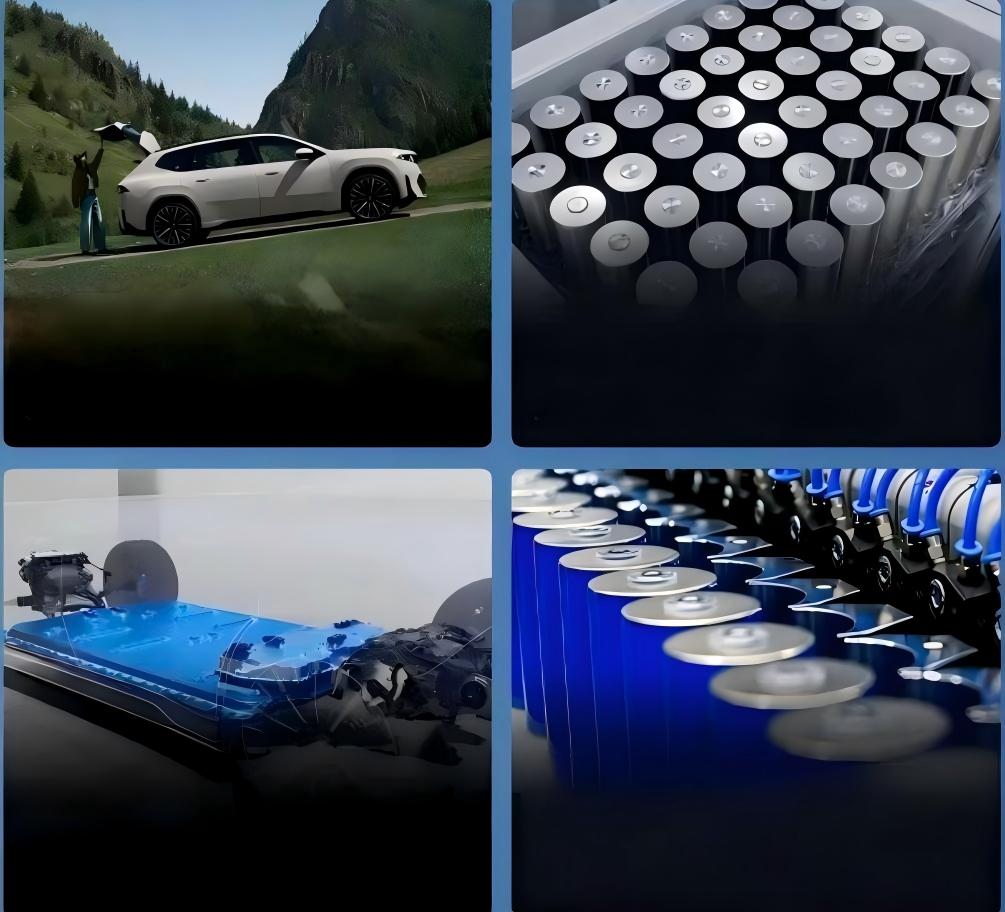
On August 21st, the new-generation iX3 long-wheelbase version specially designed for the Chinese market officially began pre-sale. The new car is available in three versions: 30L, 40L xDrive, and 50L xDrive. The price ranges from 269,900 to 339,900 yuan. It is expected to be delivered officially in November.
With the launch of this model, the battery supply pattern of the new-generation platform of BMW has come to light. Yiwei Lithium Energy and Ningde Time, domestic battery enterprises, have become the core suppliers together. The division of labor among them is significantly different from the common patterns in the industry in the past.
According to various sources, the entry-level version iX3 30L is equipped with Ningde Time's square lithium iron phosphate battery; the mid-level iX3 40L xDrive uses a ternary lithium large cylindrical battery, which is jointly supplied by Yiwei Lithium Energy and Ningde Time; the top-level iX3 50L xDrive's ternary lithium large cylindrical battery is solely supplied by Yiwei Lithium Energy.
Previously, the common practice among domestic new energy vehicle manufacturers was that the leading battery enterprises took over the high-end models, while other manufacturers took over the entry-level versions. But this time, BMW's allocation logic is:
Yiwei Lithium Energy takes the dominant share of the high-end models, while Ningde Time, in addition to participating in the mixed supply of the mid-level large cylindrical batteries, independently assumes the low-end lithium iron phosphate version.
Moreover, a media report disclosed that the square lithium iron phosphate order for the iX3 30L of BMW was not directly designated to Ningde Time, but after multiple rounds of non-public internal bidding, many enterprises participated in the competition, and it was not until the beginning of this year that Ningde Time was finally determined as the supplier. This also reflects BMW's selection thinking in the supply chain competition.
It is worth noting that Vision Power is also a supplier. Currently, it mainly targets the BMW North American market.
Previously, the technical planning of the new-generation platform of BMW for external use was mainly based on two large cylindrical battery cells, 4695 and 46120, with the volume energy density of the battery cells compared to the previous generation increasing by approximately 20%.
This addition of the lithium iron phosphate square battery version in the Chinese market is a localization adjustment. By leveraging the cost advantage of lithium iron phosphate, the starting price of the new car is lowered to 269,900 yuan, helping BMW enhance its price competitiveness in the domestic and global new energy market.
The attitude of BMW officials is also distinctive. The senior vice president of BMW Group and the Chief Technology Officer of China previously stated externally that BMW will not use the battery supplier as a marketing point, but will not deliberately conceal relevant information. Consumers can obtain the corresponding information. BMW has a professional battery laboratory, regardless of which supplier the battery cell comes from, it must be verified by BMW's unified standards to ensure consistent performance and quality.
In terms of the cooperation model, BMW has also broken away from the traditional model of directly purchasing finished batteries. BMW takes the lead in the battery formula, overall design of the battery pack, and electronic control, determines the parameter standards, and hands over the battery manufacturing to the battery enterprise. The battery pack will be assembled nearby the vehicle factory to compress logistics costs and improve supply chain response speed.
It is reported that in the global battery orders for the iX3 project, Yiwei Lithium Energy occupies about 60% of the share, Ningde Time accounts for 20-30%, and Vision Power takes the remaining 10-20% share.
Yiwei Lithium Energy's Hungarian factory prioritizes supply to the European market, and the Shenyang factory serves as a backup capacity; Vision Power promotes its implementation relying on the Jiangyin factory in China and the local factory in the United States. Ningde Time simultaneously supplies square lithium iron phosphate and some 46-series large cylindrical products, forming a complementary supply system to avoid the risk of relying on a single supplier.
From an industry perspective, this supply chain reconfiguration is an important adjustment of BMW's electrification strategy. In the past, BMW mainly relied on Samsung SDI. Now, it has incorporated BYD Energy, CATL, and Envision Power from the North American market into its global core supply chain, establishing a global supply network with differentiated regional adaptations.
Europe, China, and North America adopt different supplier combinations, taking into account local production, trade barriers avoidance, and supply chain security.
However, it should be objectively viewed that the division of shares does not simply represent a simple comparison of the technical strength of enterprises. On one hand, there are differences in product solutions, with the low-end version using lithium iron phosphate square cells and the high-end version using ternary large cylindrical cells, which are inherently different technical routes; on the other hand, it is also strongly related to production capacity progress, regional factory layout, and project bidding results.
For enterprises, this order has different meanings. BYD Energy, with the successful implementation of the 46 series large cylindrical cells, has taken the main position in the platform of luxury car manufacturers. It is reported that in the first half of 2026, BYD Energy's power battery segment revenue was 17.278 billion yuan, an increase of 53.31%.
For CATL, having both the exclusive supply of square lithium iron phosphate and participation in the supply of large cylindrical batteries, its strength is self-evident. Industry data shows that in the first five months of 2026, CATL's power battery installed capacity reached 18.84 GWh, an increase of 22.9%, and its global market share reached 40.2%, remaining at the top position in the global power battery market.
For overseas car manufacturers, now when choosing a battery partner, they no longer only consider a single technical indicator. Local production capacity, delivery capability, cost control, and diversified risk resistance capabilities have all become important considerations.
And the continuous entry of Chinese power battery enterprises into the international luxury car supply chain also confirms the strong comprehensive strength of the domestic industrial chain in manufacturing, quality control, and production capacity construction.
How to Extend 18650 Cell Lifespan?
Sep. 22, 2026
What Are the Advantages of Lithium Marine Batteries?
Sep. 22, 2026