Industry News
Home > News > Industry News > The planned production capacity is close to 2000 GWh, but the top-level battery cells remain in short supply. Why hasn't there been an abundant supply in t
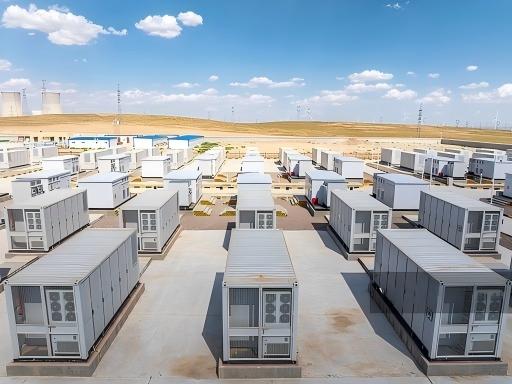
Data released by CNESA (Zhongguancun Energy Storage Industry Technology Alliance) shows that in the first half of 2026, the domestic new energy storage projects added 21.81 GW/58.60 GWh of installed capacity. Both power and energy scales decreased by 18% and 16% respectively compared to the same period last year. However, at the same time, the scale of centralized procurement and framework bidding for energy storage systems reached 80.16 GWh, increasing by 95% compared to the previous year. The proportion of independent energy storage new installations rose to 69.3%, and the average bid price for 4-hour energy storage systems increased by 21.1% compared to the previous year. The installed capacity declined, but the bidding volume increased. The capacity issue in the energy storage industry has become a focus of concern in the industry.
From September 3rd to 4th, the 2026 World Battery Power Conference was held in Yibin, Sichuan Province. At this conference, Wang Shijiang, the deputy director of the Information Technology Department of the Ministry of Industry and Information Technology, said that currently, the new energy storage industry still faces problems such as low-level repetitive construction and structural overcapacity of production capacity. Homogenization and internal competition still need to be addressed.
Tian Qingjun, the senior vice president of Vision Group, also warned at this conference about the expansion risks of energy storage battery cells. According to Tian Qingjun, this year, the planned expansion of energy storage battery cells in the industry has exceeded 800 GWh, and the installed capacity by the end of the year will be approximately 1200 GWh to 1500 GWh, with the total planned capacity approaching 2000 GWh.
Before the opening of the conference, a closed-door meeting was held. A source from one of the participants informed the reporter that the participants of this meeting included relevant government departments and top-level management of enterprises, and the discussion topics included issues such as battery production capacity expansion and the actual market demand.
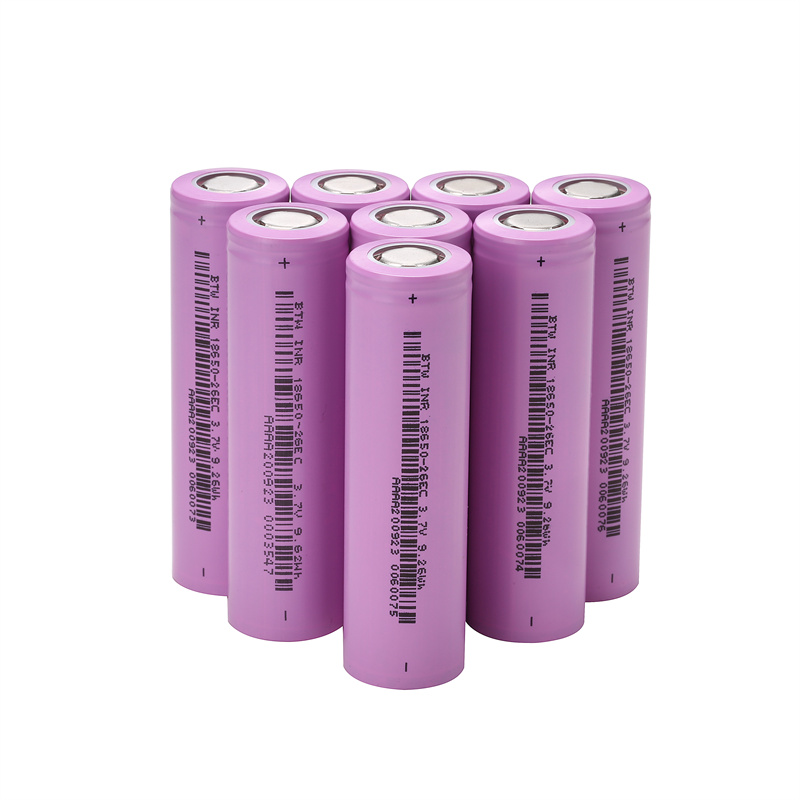
However, on the other end of the industry chain, there were voices of "shortage". Chen Song, the chief marketing officer of Xiechan Lithium Battery, said, "The top-level energy storage battery cells are still in short supply. There is a shortage of 314Ah, 587Ah, and 790Ah."
So, why hasn't there been an abundant supply with a planned production capacity close to 2000 GWh? Several people interviewed by reporters pointed out that the more prominent contradiction in the energy storage industry is not simply a simple overcapacity of total production, but a mismatch between nominal production capacity and effective production capacity.
Industry insiders: "Insufficient supply" shows a phased characteristic
From the data at different levels in the first half of 2026, the "overcapacity" of the energy storage industry did not occur simultaneously in all indicators.
The National Energy Administration data shows that as of June 2022, the installed capacity of new energy storage projects in China reached 153 GW/396 GWh, increasing by 61% compared to the previous year. Data released by CNESA shows that in the first half of 2026, the domestic new energy storage projects added 21.81 GW/58.60 GWh of installed capacity. Both power and energy scales decreased by 18% and 16% respectively compared to the same period last year.
However, in contrast to the decline in the new installed capacity, the shipment of energy storage battery cells continued to grow at a high speed. The data from Renewable Energy Consulting Agency InfoLink shows that in the first half of this year, the cumulative shipment of global energy storage battery cells was 467.84 GWh, increasing by 94.76% compared to the previous year. InfoLink also raised its forecast for global energy storage battery cell shipments in 2026 to 1026 GWh.
The 2026 semi-annual reports of A-share listed companies also show that the energy storage business is still expanding. The financial reports show that in the first half of this year, the revenue of lithium battery system of Ningde Time was 53.261 billion yuan, increasing by 87.54%; the revenue of lithium battery business of Yibin Liuyue was 15.094 billion yuan, increasing by 69.15%, and the energy storage battery shipment was 4.446 GWh, increasing by 54.88%.
A person from the Lithium Battery Industry Association told the "Everyday Finance News" that currently, from the material side, it is not the case that all battery enterprises have generally reduced production. Some enterprises are still queuing up to purchase materials. "The production schedule for batteries has been increasing month by month."
Tian Qingjun believes that this year, the shortage of supply has a phased characteristic. Some places in China have seen an increase in demand, combined with overseas procurement in advance, while the construction of new battery production capacity requires a period. Multiple factors will converge in 2026.
The increase in newly put into operation production capacity has declined year-on-year, but the shipment of battery cells, bidding energy, and material procurement have not cooled down simultaneously. The problem thus shifts to the supply side: With such a huge planned production capacity, why are high-quality battery cells still in short supply?
In this regard, Deng Song believes that the key lies in the difference between planned production capacity and the effective production capacity that can enter the market.
Deng Song provided industry data showing that among the total production capacity of batteries that have been put into operation in China, a large number of small-scale production capacities are limited by factors such as technology, customer certification, and delivery capabilities, and cannot form the effective supply that the market truly needs.
This differentiation is directly reflected in different specifications of energy storage battery cells. Deng Song further stated that currently, orders for 314Ah battery cells are generally already queued up until the second quarter of 2027, while 587Ah large battery cells are accelerating their entry into large-scale energy storage projects, and larger-capacity 790Ah battery cells are currently only achieved by a few leading enterprises for mass production. "The overall supply and demand are in a tight balance, and high-quality production capacity remains in short supply."
Technology iteration is also eliminating some "paper capacity". With the upgrade of material systems and battery cell technologies, some original planned projects, even if completed, may be difficult to become effective production capacity due to outdated technical routes. Deng Song said that some projects with lower technical generations have already been suspended. At the same time, 587Ah and 790Ah and other larger-capacity products have begun to accelerate iteration, and some old production lines still exist, but the products that the market needs have changed.
Yu Wei, the chairman of Efti, told the reporter that the overall energy storage industry is still in an upward trend, "The big trend is not in question," but the demand side has not fully released, policy regulations, safety, and scene transformation all require a process, so the market is "moving upward in a fluctuating manner," and the periodic mismatch in supply and demand is normal, there is no need to worry about the "excess" problem.
The enterprise: Not an overall "supply exceeding demand"
Xiao Bingdi, the president of Panasonic (China) Co., Ltd., also distinguished between "nominal production capacity" and "effective production capacity". He told the "Everyday Finance News" reporter that currently, the industry's production capacity problem "is not an overall supply exceeding demand, but a typical structural overcapacity."
In Xiao Bingdi's view, the ones that are truly in excess are the low-end homogeneous production capacity lacking technical barriers and insufficient safety verification. The high-quality production capacity that can support global electrification and energy storage quality development is still in a shortage state. International leading customers not only look at the production capacity scale of relevant enterprises, but also examine their energy density, cycle life, safety reliability, and carbon footprint, and some nominal production capacity thus cannot enter the supply system of leading customers.
The switch of battery production lines to energy storage may also increase supply. Deng Song predicted that from the end of October to November this year, some lithium iron phosphate battery production lines may switch to energy storage. But the ability of the production lines to switch does not mean that effective production capacity can be immediately formed. Energy storage battery cells have their own requirements in terms of cycle life, safety performance, process stability, and customer certification.
Currently, effective production capacity is in short supply, but this does not mean that there is no risk of excess in the future. Tian Qingjun mentioned that relevant departments have begun to provide "window guidance" for capacity expansion. In his view, the energy storage industry cannot repeat the path of low-level expansion and "internal price competition".
The tightness on the supply side may also continue to be transmitted to the upstream. Deng Song predicts that not all planned expansion projects will be successfully implemented in 2027. "Next year, there may be a full-chain shortage - cell shortage, and upstream materials shortage."
In fact, the lithium price in the first half of this year was significantly higher than that of the same period last year. According to data from SMM (Shanghai Metals Market), in the first half of 2026, the average price of battery-grade lithium carbonate was approximately 163,400 yuan per ton, while in the same period of 2025, it was approximately 70,400 yuan per ton, with a year-on-year increase of 132.1%; as of September 1st, the spot average price of battery-grade lithium carbonate was approximately 160,000 yuan per ton.
The tight demand for cell and the rising lithium prices have also made the energy storage industry re-examine alternative technical routes other than lithium batteries. Sodium-ion batteries have once again attracted attention.
General Manager Li Shujun of Zhongke Haishan Technology Co., Ltd. said that currently, sodium batteries have the conditions for further industrialization breakthroughs, but they cannot fully replace lithium batteries at this stage. Tian Qingjun believes that the cost crossover curve of sodium batteries and lithium batteries is emerging, and the two technical routes will form complementarity in the future.
A reporter from China Economic Daily learned that the changes in the energy storage market are not just about the replacement of technical routes. New scenarios such as computing centers, user-side energy storage, and long-duration energy storage are also changing the requirements for products in the market.
General Manager Wu Zhizhi of Zhejiang An Gaotie Electric Technology Co., Ltd. said that currently, a large number of energy storage products are mainly developed for large-scale power generation side energy storage, but future new demands will not all grow along the same product form. Especially, computing demand is concentrated in areas with dense population and load, and these areas are not suitable for simply replicating large-scale energy storage products from large-scale new energy bases.
While the demand scenarios change, the storage duration is also lengthening. Tian Qingjun judges that 6 to 8-hour long-duration energy storage will become the mainstream, but he also warns that the large-scaleization of cells cannot be a "arms race", and structural design, electrical safety, thermal management, production processes and equipment all need to be fully verified.
Qualified Lithium Battery Pack
Aug. 24, 2026