Industry News
Home > News > Industry News > The battery price increase trend is accelerating and spreading. Leading manufacturers are rushing to implement integrated strategies.
The price increase in the lithium battery industry has spread to the battery sector. Recently, several leading manufacturers have intensively raised product prices, and small and medium-sized battery enterprises have successively followed suit. A new round of battery price increase is accelerating in the industry.
A reporter from Securities Times learned that this round of cell price increase is, on the surface, a cost increase caused by the adjustment of battery consumption tax, but the deeper driving force comes from changes in the industry's supply and demand pattern. However, although battery manufacturers have a strong desire to raise prices, the actual implementation situation shows a differentiated trend.
Industry insiders said that this price adjustment is more like a stress test, which may trigger a new round of industry reshuffling and will further force enterprises to achieve extreme cost reduction and efficiency improvement, promoting the focus of competition to shift towards integration, high-endization, and globalization.
I. The Rise of Battery Price Wave
In the past month or so, several battery manufacturers have successively adjusted product prices, and the atmosphere of price increase in the industry is very intense.
BYD Energy announced that starting from September 1st, domestic sales products will increase the cost of 2% of consumption tax on the original non-tax supply price. Lishen Battery sent a customer contact letter, announcing that starting from September 1st, all products will add 2% of consumption tax cost on the original non-tax supply price, and at the same time add urban construction tax (7% of consumption tax) and education surcharge (5% of consumption tax). Wenching New Energy, Yili New Energy, and other battery manufacturers have also successively issued price adjustment letters, conveying the demand for price increase.
"At present, the industry has a consensus on the price increase, and we are also communicating with relevant customers about the price increase matters," an internal person from a second-tier battery factory in the East China region told Securities Times.
"The 'triggering factor' of this round of price increase is the adjustment of battery consumption tax. Battery manufacturers have a demand for rigid cost transfer." Li Yisha, an analyst at Shanghai Metals Energy Storage, said.
In July this year, the Ministry of Finance, the General Administration of Customs, and the State Taxation Administration issued the "Announcement on Adjusting Certain Battery Consumption Tax Policies", clearly stating that starting from September 1, 2026, consumption tax will be levied at a rate of 2% on non-mercury primary batteries, metal hydride nickel batteries, lithium primary batteries, lithium-ion batteries, and all-vanadium liquid flow batteries; starting from September 1, 2027, consumption tax will be levied at a rate of 4% on these battery products.
It is understood that the aforementioned products have enjoyed exemption from consumption tax since 2015. This policy adjustment will bring real cost increments. From the content of the publicly released price increase letters, most battery manufacturers have set the price increase window anchor at the tax threshold date of 2026 September 1.
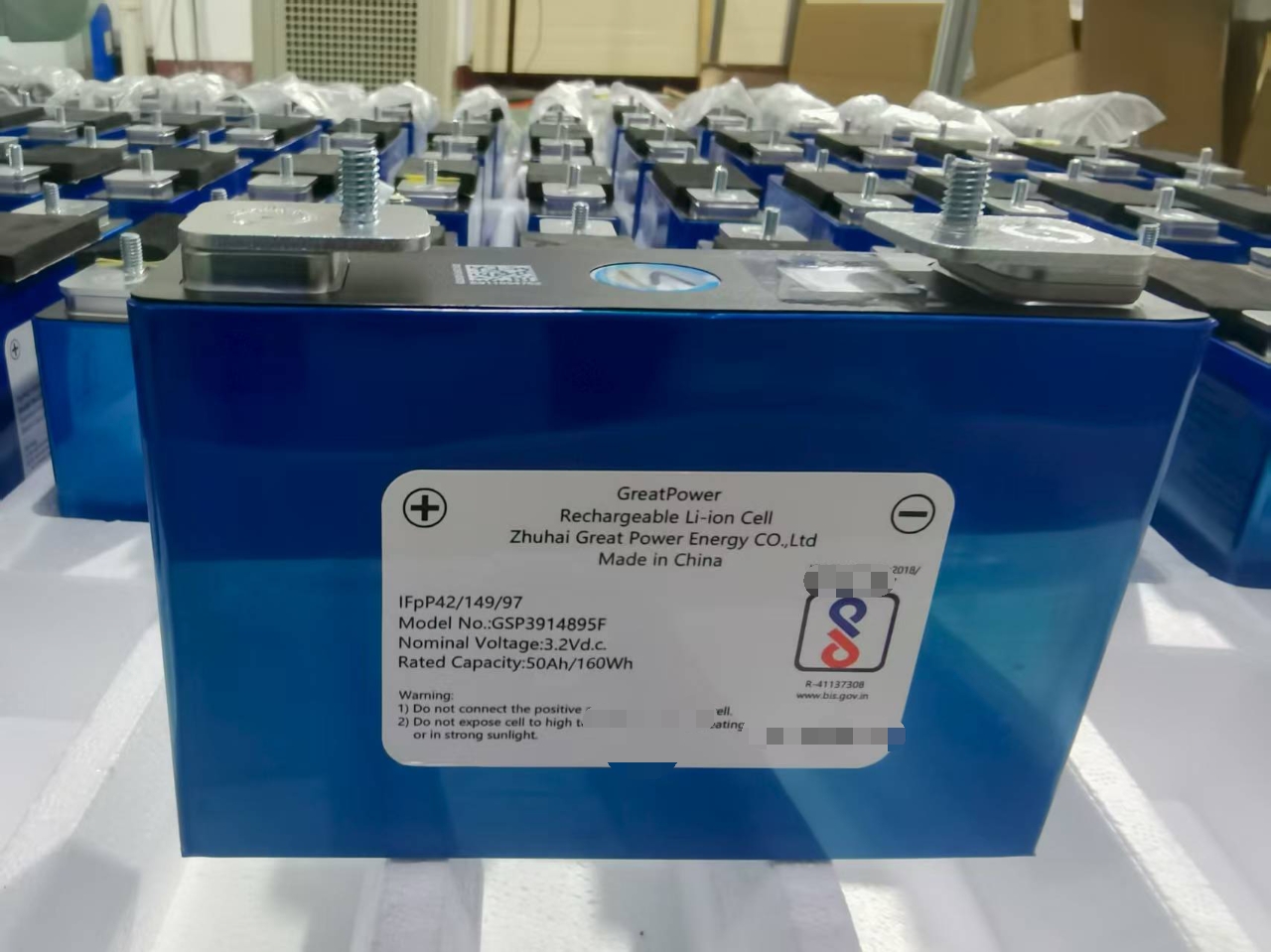
Li Yisha calculated for the reporter: Based on an average price of 0.36 yuan per Wh for energy storage cells, the 2% consumption tax will bring a cost increase of approximately 0.007 yuan per watt-hour, that is, the additional cost for each GWh of energy storage cells is about 7 million yuan.
"Although the consumption tax brings direct cost disturbances to this round of price increase, the price adjustment actions of all manufacturers tend to be consistent, and the essence lies in the continuous improvement of the current supply and demand pattern, and the bargaining power of battery manufacturers has been restored," a relevant person from Sinovel Power told Securities Times. Currently, the average capacity utilization rate of the energy storage battery industry is above 90%, and some manufacturers' production lines are even operating at full capacity. The mainstream 314Ah energy storage cells are almost "in short supply".
The aforementioned person further pointed out that the industry is currently in the critical stage of iterating to the next-generation large cells, and the expansion of mainstream 314Ah energy storage cell production lines is relatively small, which further exacerbates the temporary imbalance in supply and demand.
II. Diversification of Cost Transfer
Although battery manufacturers generally release price increase demands, the implementation process shows significant differentiation, and how the tax burden cost is allocated ultimately depends on the bargaining situation between upstream and downstream enterprises.
"Consumption tax gives major battery manufacturers the opportunity to raise prices, but not all customers will accept the price increase," The aforementioned officials from battery factories in East China stated that their pricing adjustment strategies vary depending on different customers. For small customers, the price will be raised in one go. For large customers and strategic clients, further negotiations will be conducted. It is highly likely that the costs will be shared by both the buyer and the seller.
Yiwei Lithium Energy recently publicly stated that the company will carefully analyze and plan to pass on the additional tax burden through the supply chain.
"Although the price increase for individual orders and small-scale orders is implemented quickly, the negotiation results with major customers ultimately determine the profit level and operating fundamentals of battery manufacturers," said Long Zhiqiang, the founder and general manager of Zhaoguang Consulting. Generally speaking, long-term contracts in the industry usually have a certain discount rate. If the customer's purchase volume is large enough, corresponding rebates will be given at the end of the year. These will to some extent dilute the incremental revenue from the price increase.
The signing method of orders also affects the implementation of the price increase. A battery manufacturer in South China said that the agreements it signed with some customers expire at the end of this year, and the prices have been locked. The consumption tax for consumption before the end of the year can only be borne by itself. However, recently signed orders have begun to consider the price increase.
During the interviews, it was learned that most downstream customers have some expectations for this round of price increase. "We have been communicating with cell factories about the consumption tax issue for over a month. At present, the probability of both parties sharing costs is relatively high, but the final proportion has not been determined. It will depend on factors such as the size of the supplier, the scale of procurement, and the degree of product differentiation," said an East China-based new energy heavy truck enterprise.
Long Zhiqiang said that the cost sensitivity of different types of customers varies, resulting in differences in the implementation of the price increase in different application scenarios. "The cost of batteries in the 3C consumption sector accounts for a relatively small proportion, and the cost can be more easily passed on; the customer for household storage is scattered, and the resistance to the price increase will not be very large; the large storage and battery power sectors are highly sensitive to costs, and the price transmission may go through multiple rounds of negotiations."
In Li Yisha's view, whether the price increase can be implemented as scheduled is essentially a test of the battery factory's stable supply capacity, product technical level, and customer structure, and the next few months will be an important observation window.
III. Industry Consolidation Accelerates
Most interviewees believe that the differences in the actual implementation of this round of battery price increase may accelerate the polarization of the industry.
"Headline battery factories have a high market share and strong customer loyalty, and have more abundant bargaining chips. They have greater room for negotiation in cost-sharing negotiations with the downstream; small battery factories are mostly burdened by costs and are in a more passive position. They may face a dilemma of 'cancel orders if the price increases, or suffer losses if it doesn't increase'." Li Yisha said. According to regulations, the consumption tax for lithium batteries will be further raised to 4% on September 1 next year. At that time, the cost transmission pressure for battery factories will be greater, and enterprises without bargaining power will accelerate their exit.
Yiwei Lithium Energy stated that in the long term, the battery consumption tax policy may accelerate the elimination of backward production capacity in the industry, benefiting the optimization of the industry structure and the increase of the share of leading enterprises.
The 2026 semi-annual report data shows that several battery listed companies had net profits in the single-digit range in the first half of the year. If enterprises in the industry cannot hedge against the impact of consumption tax on costs or sales, their profit margins will be even more constrained.
"The lithium battery industry has entered a new stage of market competition. The competition dimension has gradually shifted from simply competing on production capacity scale to multi-dimensional competition in cost control, technological innovation, customer resources, and supply chain integration capabilities." A relevant person from Xingyan Power stated.
In terms of cost, an integrated layout can lock in raw material supply and stabilize price fluctuations, becoming a powerful tool for industry cost reduction and efficiency improvement. Currently, leading battery factories such as CATL, Guoxuan Gaohe, Yiwei Lithium Energy, and Xingwangda have ventured into the mining sector. In 2026, CATL will establish a wholly-owned subsidiary, Era Resources Group, as the company's specialized investment, operation and management platform in the field of new energy minerals. It will integrate existing mining assets and expand high-quality projects both domestically and internationally, focusing on key resources such as lithium, nickel, and phosphorus.
In addition to extending to the upstream, some battery factories have also begun to expand to the downstream. For instance, Envision Power has formed a full-stack self-developed and self-produced capability from materials, cells, PCS to systems and power station operations, achieving a transformation from "selling products" to "selling services and benefits".
In terms of technology, large cells are the consensus in the energy storage field. The 587Ah energy storage large cell of CATL has achieved large-scale delivery; the 628Ah Mr.Big lithium iron phosphate energy cell of Yili Lithium Energy has achieved large-scale production and mass production, and the research and development of the next-generation 702Ah laminated cell is advancing steadily; the 790Ah cell of Envision Power has been delivered and delivered to the two major manufacturing bases of over 100 GWh in Cangzhou and Yichang, and has achieved "delivery for export".
"Currently, the process route for large-capacity cells has not yet converged. Whoever can first achieve stable mass production and achieve yield improvement will be able to seize the pricing power of the next-generation products," Li Yisha said.
In the market end, the value of global layout has become more prominent. "The incremental space in overseas markets is larger, and the profit level of orders is better than that in the domestic market. It will become a key variable determining the enterprise's profit level in the future," said the aforementioned battery factory in the eastern region. With the improvement of customers' requirements for local supply, the global production capacity layout has changed from "adding points" to "a must", and the advancement speed of overseas factory construction is becoming an indispensable strategic chip in the next round of competition.