Battery Knowledge
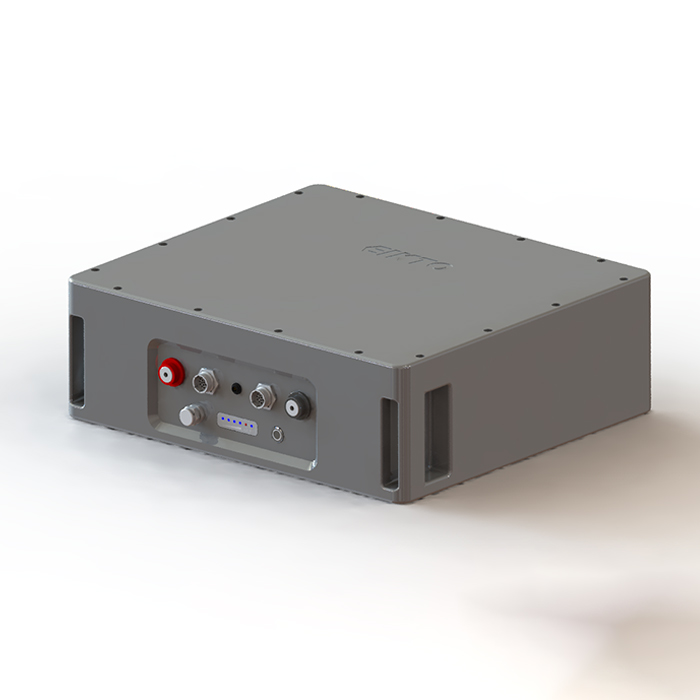
A marine battery powers some of the most important equipment on a boat, from engine starting and navigation electronics to lighting, pumps, communication systems and onboard appliances. When the battery is poorly maintained, the result may be difficult engine starting, reduced cruising time, premature battery failure or the loss of critical electrical equipment while on the water.
Proper marine battery maintenance is not limited to charging the battery occasionally. It requires regular inspection, correct charging settings, clean electrical connections, temperature management and maintenance practices suited to the battery chemistry.
Flooded lead-acid, AGM, gel and lithium iron phosphate batteries have different maintenance requirements. Applying the wrong procedure—such as adding water to a sealed AGM battery or using a lead-acid equalization setting on a LiFePO4 battery—can damage the battery and create safety risks.
This guide explains how to maintain different types of marine batteries and how to build a practical inspection schedule for boats, yachts, fishing vessels and other marine applications.
Before performing any maintenance, identify the battery chemistry and its role in the electrical system.
Common marine battery types include:
Flooded lead-acid batteries
AGM batteries
Gel batteries
LiFePO4 marine batteries
Engine-starting batteries
Deep-cycle house batteries
Dual-purpose marine batteries
The battery label, product datasheet or installation manual should identify the chemistry, nominal voltage, capacity, maximum charging current and recommended charging profile.
Never assume that two batteries with the same voltage require the same maintenance or charger settings.
Marine starting batteries and deep-cycle batteries are designed for different operating conditions.
Starting batteries deliver a large amount of current for a short period to crank an engine. They are not normally designed for repeated deep discharge.
Common applications include:
Main engine starting
Generator starting
Emergency engine-starting banks
Deep-cycle batteries are designed to supply energy over a longer period and tolerate repeated charging and discharging.
They may power:
Navigation equipment
Cabin lighting
Refrigerators
Bilge pumps
Communication systems
Electric trolling motors
Inverters
Electric propulsion systems
Using a starting battery as a frequently cycled house battery may shorten its service life. Similarly, a deep-cycle battery may not provide the cranking performance required by a large engine unless it is designed for dual-purpose use.
Visual inspection is one of the simplest ways to identify battery problems before they cause system failure.
Before inspecting a marine battery:
Turn off the engine.
Disconnect shore power.
Switch off chargers and inverters.
Turn off major DC loads.
Follow the battery manufacturer’s disconnection procedure.
Wear appropriate eye and hand protection.
Check the battery for:
Cracks in the casing
Swelling or deformation
Electrolyte leakage
Loose terminals
Corrosion around connections
Burn marks or melted insulation
Damaged battery cables
Unusual odors
Excessive heat
A damaged or blocked pressure-relief vent
Movement inside the battery compartment
A swollen, leaking, cracked or abnormally hot battery should not remain in normal service. Isolate it according to the manufacturer’s instructions and arrange inspection by a qualified marine electrical technician.
Marine environments expose electrical connections to moisture, salt and vibration. Corrosion at the terminals increases electrical resistance, which may cause voltage loss, slow charging, weak engine cranking and localized heating.
To clean the terminals:
Disconnect charging sources and loads.
Disconnect the battery using the correct sequence specified for the vessel.
Inspect cables and terminal lugs.
Remove surface corrosion with an appropriate terminal-cleaning tool.
Clean and dry the connection surfaces.
Reconnect the cables and tighten them to the recommended torque.
Apply an approved terminal protectant when permitted by the battery manufacturer.
For flooded lead-acid batteries, manufacturers may recommend using a baking soda and water solution to neutralize acid residue on the battery exterior. The cleaning solution must not enter the battery cells. Trojan Battery also recommends keeping flooded batteries clean and dry and protecting the terminals against corrosion.
Do not overtighten battery terminals. Excessive torque can damage terminal posts, internal connections or threaded inserts.
Battery maintenance should include the entire current path, not only the battery itself.
Inspect:
Positive and negative cables
Battery switches
Fuse holders
Busbars
Battery isolators
Charger connections
Inverter connections
Grounding connections
Parallel and series interconnects
Look for loose fasteners, discoloration, damaged insulation and corrosion underneath heat-shrink tubing.
A high-current connection may appear secure while still having excessive resistance. If a cable or terminal becomes noticeably hotter than nearby connections during operation, the system should be inspected.
For large battery banks, record the voltage drop across important connections during charging and discharging. Abnormal voltage drop may indicate a loose, corroded or undersized connection.
Flooded lead-acid batteries require more routine maintenance than sealed AGM, gel or LiFePO4 batteries.
The electrolyte must remain above the battery plates. Exposed plates can become permanently damaged.
General watering procedure:
Wear eye protection and chemical-resistant gloves.
Work in a well-ventilated area.
Remove the vent caps carefully.
Confirm that the plates are covered before charging.
Fully charge the battery.
Add distilled or deionized water to the manufacturer’s recommended level.
Replace and tighten the vent caps.
Trojan advises that flooded batteries should normally be watered after a full charge. Before charging, enough water should be present to keep the plates covered.
Do not use:
Tap water
Mineral water
Salt water
Battery acid for routine topping up
Contaminated containers
Routine water loss occurs because of charging and gassing. Unusually rapid water loss may indicate overcharging, excessive temperature or an incorrect charger setting.
Flooded lead-acid batteries may be checked using open-circuit voltage and, where appropriate, electrolyte specific gravity.
Measurements should be taken according to the battery manufacturer’s procedure. A recently charged battery may retain a surface charge, while a battery operating under load may show a lower voltage than its resting voltage.
Do not diagnose battery condition from a single voltage reading alone.
Flooded batteries can release gas during charging. The battery compartment must provide suitable ventilation and should be kept away from ignition sources.
Do not smoke, create sparks or use an open flame near a charging lead-acid battery.
AGM batteries are sealed valve-regulated lead-acid batteries. Their electrolyte is absorbed into glass mat separators, so they do not require routine watering.
AGM maintenance normally includes:
Keeping the casing clean and dry
Checking terminal torque
Inspecting cables and connectors
Using an AGM-compatible charging profile
Avoiding prolonged undercharging
Preventing excessive charging voltage
Monitoring storage voltage
Checking for swelling or abnormal heating
AGM batteries must not be opened or refilled with water. AGM designs lose very little water during normal charging and do not have removable service vents.
Although AGM batteries are often described as maintenance-free, the connections, charger, enclosure and storage condition still require inspection.
Gel batteries are another type of sealed valve-regulated lead-acid battery. The electrolyte is immobilized in a gel structure.
Gel batteries can be sensitive to excessive charging voltage. An incorrect charger setting may create gas pockets or permanently reduce battery capacity.
For gel batteries:
Use a charger approved for the specific gel battery
Do not add water
Do not open the casing
Avoid high-voltage equalization unless specifically authorized
Follow the manufacturer’s temperature-compensation requirements
Inspect the battery for swelling and heat
Keep the terminals clean and properly tightened
Never assume that an AGM charger profile is automatically suitable for a gel battery.
LiFePO4 marine batteries generally require less physical maintenance than flooded lead-acid batteries, but they rely heavily on correct system design and electronic protection.
Maintenance should include:
Inspecting the battery casing
Checking terminals and cables
Confirming BMS operation
Reviewing fault logs
Monitoring cell or pack temperature
Verifying charger compatibility
Confirming alternator protection
Checking communication with the inverter or charger
Keeping firmware current when applicable
Inspecting external fuses and disconnects
LiFePO4 batteries do not require electrolyte watering. Opening a sealed battery may damage the battery and invalidate product protections.
The alternator, shore charger, solar controller and inverter-charger must all be configured for the installed lithium battery system.
Lead-acid equalization and desulfation modes should generally not be applied to LiFePO4 batteries unless the battery manufacturer explicitly permits them.
Charging lithium batteries at low temperatures can damage the cells. The exact minimum charging temperature varies by product and whether the system includes internal heating.
For example, some Victron lithium battery manuals specify a permitted charging range beginning at 5°C, while Victron charger instructions warn against charging lithium-ion batteries below 0°C. These differences show why the limits for the specific battery and BMS must be followed rather than applying a universal value.
A LiFePO4 marine battery used in cold climates should have one or more of the following:
Low-temperature charge protection
Internal battery heating
External enclosure heating
Temperature sensors
BMS-controlled charger shutdown
Protected installation inside a conditioned compartment
The battery management system should protect against conditions such as:
Cell overvoltage
Cell undervoltage
Charge overcurrent
Discharge overcurrent
Short circuit
High temperature
Low-temperature charging
Cell imbalance
A BMS fault should be investigated rather than repeatedly reset without determining the cause.
Incorrect charging is one of the most common causes of premature battery failure.
The charger should match:
Battery chemistry
Battery-bank voltage
Battery-bank capacity
Maximum charging current
Recommended absorption voltage
Float-voltage requirements
Temperature-compensation requirements
BMS communication requirements
A programmable charger is helpful only when its settings are configured correctly.
When a boat contains different battery chemistries—for example, an AGM starting battery and a LiFePO4 house bank—the charging system may require:
Separate chargers
A DC-to-DC charger
Isolated charging outputs
Battery-specific charge profiles
Alternator protection
BMS-controlled relays
Do not connect batteries with different chemistries directly in parallel unless the system has been specifically engineered for that arrangement.
Frequently discharging a battery beyond its recommended depth of discharge can shorten its service life.
To reduce excessive discharge:
Monitor battery state of charge
Set suitable inverter cut-off values
Investigate unexpected overnight loads
Turn off unused equipment
Check bilge-pump cycling
Inspect refrigerators and other continuous loads
Use low-voltage alarms
Size the battery bank for the expected daily energy consumption
For lithium systems, do not rely exclusively on voltage to estimate the state of charge because LiFePO4 batteries have a relatively flat operating-voltage curve. A properly calibrated battery monitor or BMS-based state-of-charge reading is more useful.
Small electrical loads can discharge a marine battery during storage even when the boat appears to be switched off.
Common parasitic loads include:
Bilge-pump monitoring circuits
Alarm systems
Stereo memory
Tracking devices
Network equipment
Battery monitors
Inverter standby circuits
Automatic relays
Corroded or wet wiring
Measure the vessel’s current draw after the main equipment has been switched off. Unexpected current consumption should be investigated before long-term storage.
Critical safety loads, such as an automatic bilge pump, should only be disconnected if an alternative protection plan is in place.
Marine batteries may remain unused for weeks or months during the off-season. Improper storage can cause self-discharge, sulfation, imbalance or permanent cell damage.
Before storage:
Fully inspect the battery.
Clean and dry the casing.
Charge it according to the manufacturer’s instructions.
Check terminal and cable condition.
Turn off unnecessary loads.
Disconnect the battery when appropriate.
Store it in a dry, protected location.
Check it periodically.
Recharge according to the manufacturer’s schedule.
The required storage state of charge differs between lead-acid and lithium batteries. Do not automatically store every chemistry at 100% charge.
For flooded lead-acid batteries, also inspect electrolyte levels. For lithium batteries, confirm that the BMS will not be slowly discharged by connected equipment during long storage.
Batteries connected in the same series or parallel bank should have closely matched characteristics.
Avoid mixing:
Different chemistries
Different capacities
Different brands or models
Old and new batteries
Batteries with different usage histories
Batteries with significantly different states of charge
An older or weaker battery can limit the usable capacity of the complete bank and cause uneven charging.
When replacing one battery in a multi-battery bank, evaluate the condition and age of the remaining batteries before deciding whether a partial replacement is appropriate.
Testing can identify declining performance before the battery fails during a trip.
Depending on battery type, testing may include:
Resting open-circuit voltage
Charging voltage
Cranking voltage
Load testing
Conductance testing
Capacity testing
Internal-resistance testing
Specific-gravity measurement
BMS data review
Cell-voltage comparison
Thermal inspection
A battery that reaches normal voltage but provides very little capacity may still be near the end of its useful life.
For important engine-starting or emergency systems, schedule professional testing before the main boating season.
| Maintenance Task | Before Every Trip | Monthly | Every 3–6 Months | Before Storage |
|---|---|---|---|---|
| Check battery voltage or state of charge | ✓ | ✓ | ✓ | ✓ |
| Inspect casing for cracks or swelling | ✓ | ✓ | ✓ | ✓ |
| Check terminal tightness | ✓ | ✓ | ✓ | |
| Inspect cables and insulation | ✓ | ✓ | ✓ | |
| Clean terminal corrosion | As needed | ✓ | ✓ | |
| Check flooded-battery water level | ✓ | ✓ | ✓ | |
| Review lithium BMS alarms | ✓ | ✓ | ✓ | ✓ |
| Check charging voltage | ✓ | ✓ | ✓ | |
| Test starting performance | ✓ | ✓ | ✓ | |
| Conduct capacity or load testing | ✓ | As needed | ||
| Check parasitic current | ✓ | ✓ |
This is a general schedule. Boats exposed to saltwater, high humidity, extreme temperatures or frequent deep cycling may require more frequent inspection.
AGM, gel, flooded and LiFePO4 batteries may require different charging voltages and control strategies.
Flooded batteries should normally be watered after charging, although the plates must remain covered before charging.
AGM, gel and sealed lithium batteries should not be opened or watered.
Even light corrosion can increase resistance and reduce engine-cranking performance.
A discharged battery should not remain unattended for an extended period. Recharge it according to the manufacturer’s procedure.
Low-temperature charging requirements depend on chemistry. Lithium batteries require particular attention because charging below the specified temperature may cause damage.
Combining incompatible batteries can cause charging imbalance and unreliable system performance.
A BMS shutdown usually indicates an abnormal condition. The cause should be identified before returning the battery to normal service.
Battery replacement may be necessary when:
The engine cranks slowly despite a full charge
Capacity has decreased substantially
The battery cannot hold a charge
Voltage drops rapidly under load
The casing is swollen or cracked
Electrolyte leakage is present
Internal resistance has increased significantly
One cell or series group repeatedly becomes imbalanced
The battery overheats during normal operation
The BMS reports repeated cell faults
The battery no longer passes the required load or capacity test
Service life depends on chemistry, cycle depth, operating temperature, charging quality, vibration, maintenance and storage conditions. Calendar age alone should not be the only replacement criterion.
Charge the battery whenever its state of charge falls below the level recommended by the manufacturer. Boats in storage should be checked periodically because parasitic loads and self-discharge can gradually drain the battery.
A suitable marine charger with the correct battery profile may support long-term maintenance charging. However, the charger must be approved for the installed chemistry and should be inspected for correct operation.
Disconnecting the battery can prevent parasitic discharge, but critical equipment such as bilge pumps may need a continuous power supply. The decision should be based on the vessel’s electrical design and storage conditions.
No. Use distilled or deionized water as specified by the battery manufacturer. Minerals in tap water can contaminate the electrolyte.
No. AGM batteries are sealed and should not be opened or filled with water.
LiFePO4 batteries do not require watering, but terminals, cables, fuses, the BMS, charging equipment and temperature controls still require regular inspection.
Only when the charger settings comply with the battery manufacturer’s requirements and unsuitable functions such as equalization are disabled. A dedicated lithium-compatible charger is generally the safer solution.
Possible causes include self-discharge, parasitic electrical loads, a defective charging system, wiring leakage, battery aging or BMS consumption.
Use a combination of voltage measurement, load or capacity testing, charging behavior and physical inspection. A normal resting voltage alone does not prove that the battery still has sufficient usable capacity.
Before leaving the dock, confirm that:
The battery is adequately charged
The casing is undamaged
The battery is securely restrained
Terminals are clean and tight
Cables are undamaged
Charging equipment operates correctly
Flooded-battery electrolyte is at the proper level
Lithium BMS alarms are clear
Starting performance is normal
Critical onboard equipment has sufficient reserve power
Proper marine battery maintenance protects more than the battery itself. It supports reliable engine starting, uninterrupted navigation, safe bilge-pump operation and dependable onboard electrical power.
The most important rule is to maintain the battery according to its chemistry. Flooded lead-acid batteries require electrolyte inspection and watering, AGM and gel batteries require correct voltage control, and LiFePO4 batteries depend on a compatible BMS and charging system.
Regular inspections, clean terminals, proper charging, controlled storage and periodic testing can reduce unexpected failures and extend the useful life of the marine battery system. For commercial vessels, electric boats or customized marine energy systems, battery maintenance requirements should be considered during the initial battery pack, BMS and charger design rather than after installation.