Industry News
Home > News > Industry News > 2026 marks a turning point for the industrialization of sodium-ion batteries: core technological bottlenecks have been fully overcome, and large-scale commercia
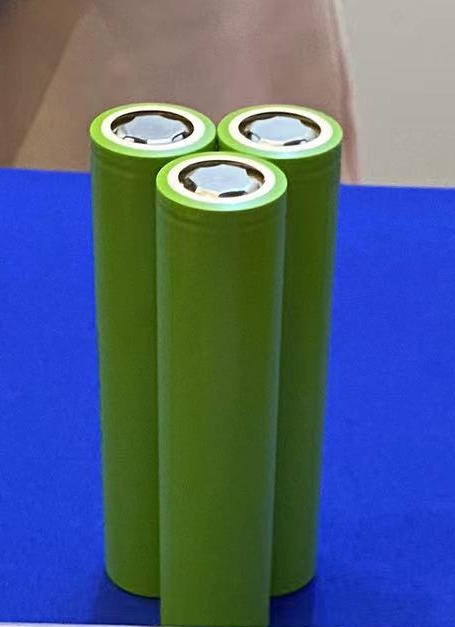
2026 is widely recognized within the industry as the inaugural year for the mass commercialization of sodium-ion batteries. Thanks to breakthroughs in material systems, manufacturing process iteration, and revolutionary advances in safety technology, long-standing challenges—such as low energy density, insufficient cycle life, and low production yield—have been systematically resolved. Leading domestic battery manufacturers have collectively unlocked mass production technologies and secured massive orders. Combined with sodium batteries’ outstanding low-temperature performance, abundant raw material reserves, and significant cost advantages, the industry has formally moved beyond the "laboratory stage" and entered a new era of large-scale deployment across multiple applications including power batteries, energy storage, and low-speed transportation. This shift is poised to reshape the global new-energy battery landscape.
On the technical front, Chinese research teams have achieved major breakthroughs, fundamentally addressing the safety shortcomings that previously hindered sodium battery development and laying a solid foundation for industrialization. In April 2026, Professor Hu Yongsheng’s team from the Institute of Physics, Chinese Academy of Sciences, published a landmark study in Nature Energy, successfully developing a polymerizable non-flammable electrolyte (PNE). For the first time globally, this innovation completely prevents thermal runaway in ampere-hour-level sodium-ion batteries. The new electrolyte demonstrates exceptional environmental adaptability, operating stably across an ultra-wide temperature range from -40°C to 60°C. It also resolves critical safety issues associated with conventional sodium batteries—including flammable electrolytes, high-temperature failure, and thermal runaway propagation—significantly enhancing overall operational safety and stability under all conditions, filling a global gap in intrinsic safety technology for sodium batteries.
Meanwhile, engineering challenges on the industrial side have been comprehensively overcome, making mass production fully mature. At the 2026 Super Tech Day, CATL announced it had successfully broken through four key industry bottlenecks in sodium-ion battery mass production: extreme moisture control, gas generation from hard carbon, aluminum foil adhesion, and self-forming negative electrodes. The company has solved over a hundred detailed production challenges, establishing a complete end-to-end manufacturing pathway from R&D to large-scale production. According to public plans, its next-generation sodium-ion cells will achieve an energy density of up to 175 Wh/kg—approaching mainstream lithium iron phosphate levels—and plan to launch mass production in the fourth quarter of 2026, targeting an annual capacity of 25–30 GWh. Products will cover four core markets: passenger vehicles, light commercial vehicles, battery swapping, and energy storage.
Beyond CATL, several leading domestic companies have simultaneously advanced their technological capabilities, pushing the sodium battery industry into a multi-pronged pre-production phase. Gotion High-tech disclosed that it has successfully tackled industry-wide challenges such as sodium dendrite formation and thermal runaway. By optimizing electrolyte formulations and upgrading cell structural designs, the company has established a comprehensive safety protection system. Its sodium batteries have passed multiple extreme safety tests, meeting all performance benchmarks and entering full-scale production preparation, with formal mass production expected by Q4 2026. At CIBF2026, CATL, BYD, and Sunwoda unveiled their next-generation sodium batteries, with量产-grade cell energy densities generally reaching 160–180 Wh/kg—narrowing the performance gap with lithium iron phosphate batteries and further highlighting sodium batteries’ superior cost-effectiveness.
The execution of large-scale orders and real-world testing across multiple scenarios signal that commercialization of sodium batteries has entered a substantive acceleration phase. In April 2026, CATL signed a three-year, 60 GWh strategic cooperation agreement with Hybricon, securing what is currently the largest sodium battery order globally, confirming the industry's readiness for large-scale delivery. During extreme condition field tests, vehicles equipped with domestically produced sodium-ion batteries completed road trials in Yakeshi, Inner Mongolia, under -30°C sub-zero temperatures, demonstrating stable power output throughout without degradation. This fully validated the excellent low-temperature adaptability of sodium batteries, meeting application requirements in cold northern regions of China for both stationary energy storage and vehicle propulsion. Previously, the world's first mass-produced sodium-ion passenger vehicle and light commercial vehicle were officially announced, marking a breakthrough for sodium batteries in the new-energy passenger car sector.
Cost advantages have become the core driver behind sodium batteries replacing traditional lithium batteries, signaling the arrival of a turning point in industrial cost-effectiveness. Leveraging natural strengths such as abundant sodium reserves, no reliance on scarce lithium resources, and a simplified material system, combined with mature mass-production processes and improved yield rates, leading domestic companies achieved significant reductions in sodium battery cell costs by 2026, gradually approaching the cost level of conventional lithium iron phosphate (LFP) batteries. Industry estimates suggest that as annual production capacity ramps up and economies of scale emerge, sodium-ion battery costs could fully match or even fall below those of LFP batteries within the year, creating strong substitution advantages across applications including low-speed electric vehicles, two-wheelers, grid energy storage, commercial and industrial backup power, and data center uninterruptible power supplies. Meanwhile, developing sodium-ion batteries can effectively reduce China’s dependence on imported lithium resources, holding significant strategic importance for ensuring energy security in the new-energy industry and strengthening the battery supply chain.
Industry analysts note that by 2026, sodium-ion batteries have completed the full cycle of "technology validation—engineering breakthroughs—mass production—real-world deployment," firmly establishing their industrialization trajectory. In the next one to two years, with continued capacity expansion, ongoing technological iteration, and further cost reductions, sodium-ion batteries are poised to transition from niche supplementary products to mainstream power and energy storage solutions, unlocking a market worth tens of billions of yuan and emerging as a new core engine for growth in the new-energy sector, continuously driving high-quality development across multiple fields including low-altitude economy, new power systems, and new-energy vehicles.