Battery Knowledge
Home > News > Battery Knowledge > Battery Energy Storage Systems: How They Work, Applications, and Selection Guide
As renewable energy, electrification, and distributed power generation continue to expand, managing when and how electricity is used has become increasingly important. Battery Energy Storage Systems (BESS) provide a practical way to store electrical energy and release it when required, helping businesses, utilities, renewable energy projects, and microgrids improve power flexibility and reliability.
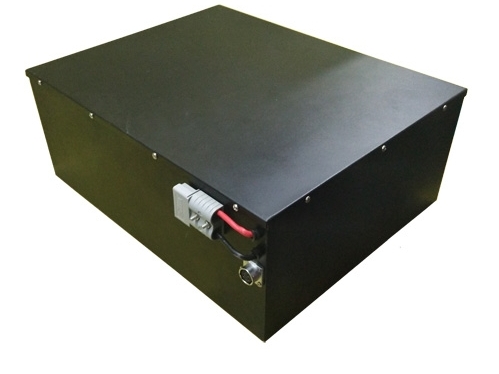
Unlike a standalone battery pack, a Battery Energy Storage System combines batteries with power conversion, battery management, thermal management, control, monitoring, and safety equipment. These components work together to manage energy efficiently and safely throughout the charging and discharging process.
For commercial and industrial users, BESS can support peak shaving, backup power, renewable energy integration, demand management, and energy cost optimization. For utilities and large renewable projects, battery storage can also assist with grid stabilization, frequency regulation, and energy shifting.
This guide explains how Battery Energy Storage Systems work, the main components of a BESS, common applications, important selection factors, and what project developers should consider when planning an energy storage installation.
A Battery Energy Storage System, commonly abbreviated as BESS, is an integrated system designed to store electrical energy in rechargeable batteries and deliver that electricity when needed.
Electricity may come from several sources, including:
Solar photovoltaic systems
Wind power systems
Utility grids
Diesel or gas generators
Distributed energy resources
Combined renewable and grid power systems
The stored electricity can later be discharged to support electrical loads, reduce grid demand, stabilize renewable generation, or provide backup power.
A typical BESS is much more than a battery. It usually includes several interconnected subsystems responsible for energy storage, conversion, monitoring, protection, and communication.
The operating principle of a Battery Energy Storage System can be divided into three basic stages: charging, storing, and discharging.
During charging, electricity from the grid, solar panels, wind turbines, or another power source enters the energy storage system.
Because batteries normally operate using direct current, a power conversion system manages the electrical conversion required between the AC power network and the DC battery system.
Energy is then stored inside battery cells.
Once charged, electricity remains stored as chemical energy inside the battery cells.
The system continuously monitors parameters such as:
Battery voltage
Current
Temperature
State of charge
State of health
Cell balance
Charge and discharge limits
These parameters help maintain battery performance and safe operating conditions.
When electricity is needed, stored DC energy is released from the batteries.
The power conversion system converts the DC electricity into AC electricity suitable for equipment, buildings, industrial loads, or the electrical grid.
The discharge process may be triggered automatically according to factors such as:
Electricity price
Grid demand
Renewable generation level
Peak demand
Power outage
Energy management strategy
This automated control is one reason modern BESS solutions can provide significant value in complex energy systems.
One of the advantages of BESS technology is that the same basic storage platform can support several different energy management applications.
Solar and wind generation are variable because their output depends on weather conditions.
A Battery Energy Storage System can store excess renewable electricity when production is high and release it when generation decreases.
For example:
During the middle of the day, a solar photovoltaic system may produce more electricity than a facility requires.
Instead of exporting all excess electricity to the grid, part of that energy can be stored in the battery.
Later in the evening, the stored energy can be discharged to support the facility's electrical demand.
This process can increase renewable energy utilization.
Solar-plus-storage has become a common configuration for commercial facilities, factories, remote sites, and microgrids.
A typical configuration includes:
PV Panels → Solar Inverter → Electrical System → Battery Energy Storage System
Depending on system architecture, the BESS may be AC-coupled or DC-coupled.
Solar battery storage can help:
Increase solar self-consumption
Reduce electricity purchased from the grid
Provide backup energy
Shift solar energy to evening demand periods
Improve energy independence
Many commercial and industrial electricity tariffs include charges related to maximum power demand.
A facility may have relatively stable electricity usage for most of the day but experience short periods of very high demand.
Battery storage can discharge during these high-demand periods.
This reduces the amount of power drawn from the grid and may lower peak demand charges.
Typical peak shaving applications include:
Manufacturing facilities
Commercial buildings
Warehouses
Data centers
Industrial parks
Logistics centers
Electricity prices can vary depending on time of day or market conditions.
A Battery Energy Storage System can potentially:
Charge during lower-price periods
and
Discharge during higher-price periods
This strategy is often called energy arbitrage or time-of-use optimization.
The economic value depends on local electricity pricing, battery efficiency, cycling strategy, and project operating costs.
Utility-scale BESS installations can range from several megawatt-hours to much larger projects.
They may be deployed alongside:
Solar farms
Wind farms
Substations
Power plants
Transmission networks
Distribution networks
Common utility-scale applications include:
Renewable energy shifting
Frequency regulation
Capacity support
Grid stabilization
Renewable curtailment reduction
Ancillary services
These systems are usually designed as modular battery blocks that can be expanded according to project capacity requirements.
A BESS should not be selected based only on battery capacity.
Project developers should evaluate the entire operating requirement.
The power rating determines how much electrical power the system can provide at one time.
For peak shaving, engineers need to understand the facility's maximum demand and how much that peak needs to be reduced.
For backup power, the combined power requirement of critical loads must be calculated.
Energy capacity determines how long the system can supply power.
A project requiring 1 MW of output for four hours needs significantly more stored energy than a project requiring the same power for only one hour.
Battery chemistry affects several characteristics, including:
Energy density
Thermal behavior
Cycle performance
Operating temperature
Cost
Safety characteristics
Lithium iron phosphate is widely used in stationary BESS applications, although project requirements should determine the most suitable chemistry.
Battery cycle life describes how many charging and discharging cycles a battery can perform before reaching a defined reduction in usable capacity.
Actual battery life depends on several variables.
These include:
Depth of discharge
Operating temperature
Charging rate
Discharging rate
Daily cycle frequency
State-of-charge window
Battery lifetime should therefore be evaluated using the actual project operating profile.
Depth of discharge indicates how much of the battery's stored energy is used during each cycle.
For example, using nearly the full capacity every cycle generally places different stress on a battery than using only a limited portion of its capacity.
The operating window should be optimized according to required usable energy and expected battery life.
Some energy is lost during charging, storage, power conversion, and discharging.
Round-trip efficiency measures how much of the input energy can eventually be recovered.
Higher efficiency generally improves the economics of applications involving frequent charging and discharging.
Temperature control affects battery consistency and service life.
When evaluating a system, buyers should consider:
Cooling method
Temperature uniformity
Ambient operating conditions
HVAC redundancy
Monitoring capability
This is especially important for projects installed in hot, cold, humid, dusty, or coastal environments.
A BESS supplier should be able to explain the system's safety architecture.
Important areas include:
Cell monitoring
Electrical protection
Thermal management
Fire detection
Emergency shutdown
Isolation
Enclosure protection
Fault monitoring
System design should also comply with relevant local electrical, fire, and grid interconnection requirements.
Energy requirements may increase after the initial project is installed.
A modular BESS design can make future expansion easier.
For example, additional battery cabinets or containers may be added as project demand grows, provided the electrical and control architecture has been designed for expansion.
Modern Battery Energy Storage Systems should provide clear operational visibility.
Monitoring platforms may track:
State of charge
Battery temperature
Charging power
Discharging power
Energy throughput
System alarms
Battery health
Historical operating data
Remote monitoring can simplify operation and maintenance, particularly for distributed energy storage projects.
Correct sizing requires analysis of the project rather than simply choosing the largest battery available.
A typical BESS sizing process includes the following steps.
Review electricity consumption over time.
For commercial and industrial projects, high-resolution interval data is particularly useful.
Identify:
Daily peak demand
Average load
Minimum load
Seasonal variation
Operating hours
Determine the primary purpose of the battery.
Possible objectives include:
Peak shaving
Solar self-consumption
Backup power
Energy arbitrage
Microgrid stabilization
Grid services
Different applications require different power-to-energy ratios.
Calculate the maximum discharge power the system must supply.
For example, if a facility wants to reduce grid demand from 2 MW to 1.5 MW during peak periods, approximately 500 kW of battery discharge may be required, subject to actual site conditions.
Estimate how long the BESS needs to discharge.
If the 500 kW reduction must continue for two hours, the system will require sufficient usable energy to support that operating period.
Engineering allowances should also consider conversion losses, operating reserve, battery degradation, and usable state-of-charge limits.
Battery capacity gradually decreases over time.
A project designed to meet a required energy capacity many years after installation may therefore require additional initial capacity or future augmentation.
Renewable power generation and energy demand do not always occur at the same time.
Solar production often peaks around midday, while electricity demand may remain high later in the afternoon or evening.
Battery storage allows part of this energy to be shifted.
Instead of:
Generate → Use immediately or export
the system can operate as:
Generate → Store → Use later
This capability is known as energy shifting.
For renewable power plants, BESS may also reduce rapid fluctuations in power output.
When clouds reduce solar production or wind conditions suddenly change, batteries can respond quickly to smooth part of the variation.
Industrial users increasingly require stable electricity while also trying to control energy costs.
Production facilities may experience:
High peak demand
Sensitive equipment
Variable production schedules
Renewable energy installations
Grid capacity limitations
Power quality concerns
Battery Energy Storage Systems provide another layer of flexibility between electricity supply and industrial loads.
Rather than changing production schedules entirely according to grid conditions, a properly designed BESS can help manage some of those fluctuations.
For medium- and large-scale energy storage projects, containerized solutions are widely used.
A containerized BESS can integrate:
Battery racks
BMS
Electrical distribution
Thermal management
Fire protection
Communication equipment
Monitoring systems
Containerized systems offer a modular approach to project development.
Multiple containers can be installed in parallel to achieve the required total capacity.
This format is particularly useful for:
Solar farms
Wind farms
Industrial energy storage
Utility projects
Microgrids
Remote power stations
Safety should be considered throughout the complete system lifecycle.
This includes:
Battery selection
Electrical design
System installation
Commissioning
Operation
Maintenance
Emergency response
Important design measures can include battery-level monitoring, multiple layers of electrical protection, temperature management, fault isolation, ventilation, gas detection, and fire suppression.
Site layout is also important.
Large projects may require defined spacing between battery containers, access routes for emergency response, and separation from nearby equipment according to applicable regulations.
Because requirements vary by country and project type, system developers should always review local codes and certification requirements.
Battery Energy Storage Systems are becoming a critical part of modern electrical infrastructure, connecting renewable generation, utility grids, industrial facilities, microgrids, and emerging EV charging networks.
The value of a BESS does not depend only on battery capacity. Effective projects require correct system sizing, appropriate battery chemistry, reliable power conversion, thermal management, safety protection, intelligent energy management, and integration with the surrounding electrical system.
For commercial and industrial users, battery storage can provide greater control over electricity consumption while supporting renewable energy and power reliability. For utilities and renewable energy developers, BESS provides a flexible resource for energy shifting and grid support.
When planning a Battery Energy Storage System project, buyers should begin by defining the application, required power, required storage duration, operating environment, electrical connection, and expected system duty cycle. These factors provide the foundation for selecting an appropriate BESS configuration and developing a reliable long-term energy storage solution.

How to Extend 18650 Cell Lifespan?
Sep. 22, 2026
What Are the Advantages of Lithium Marine Batteries?
Sep. 22, 2026