Battery Knowledge
Home > News > Battery Knowledge > What are the cutting-edge technologies in the energy storage systems of electric vehicles?
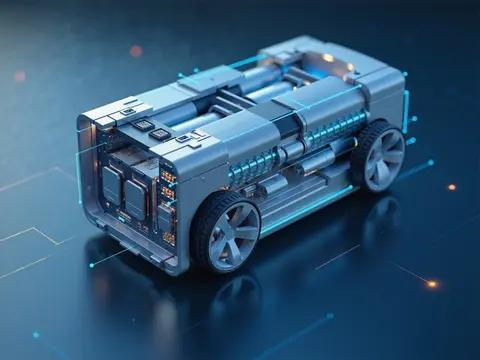
The current cutting-edge technologies in the energy storage systems of electric vehicles are accelerating their implementation in three main directions: solidification, material innovation, and large cell integration. Here are the core highlights in 2026:
1. Next-generation battery routes
All-solid-state batteries: Using solid electrolytes to replace liquid ones, inherently solving the risk of thermal runaway. The energy density target exceeds 400 Wh/kg (such as the all-solid-state battery cell of BYD reaching 480 Wh/kg), and the cycle life can reach over 3,200 times. In 2026, it is in the critical transitional period of semi-solid demonstration and full-solid small-scale trial production.
Sodium-ion batteries: Entering the mass production explosion period in 2026, with abundant reserves in the earth's crust and costs 30%-40% lower than lithium batteries. The core advantage is extreme cold adaptability (capacity retention rate > 90% at -40°C), suitable for cold regions and high-altitude scenarios; Nidea Technology plans to mass-produce in the passenger vehicle sector in the middle of the year.
2. Continuous upgrading of mainstream lithium batteries
Lithium manganese iron phosphate (LMFP): Energy density is 15%-20% higher than traditional lithium iron phosphate, reaching 200 Wh/kg, and supporting 6C ultra-fast charging. It is the preferred solution for A-level/B-level vehicles in 2026.
Silicon-based composite anode: Solving the volume expansion problem through "silicon-carbon + graphite", further improving energy density and fast-charging performance, with the anode material production concentrating on silicon-based.
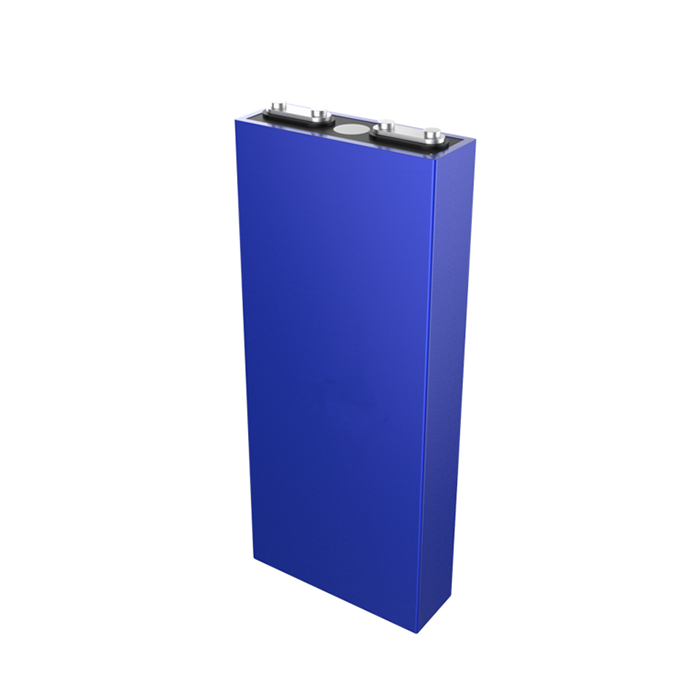
Large cell scale-up: Capacity ≥ 500 Ah (such as Nidea Technology's 587 Ah and BYD's 2710 Ah energy storage special blade battery), significantly reducing system cost and per-kilowatt-hour cost, and directly adapting to long-term energy storage needs.
3. System and management innovation
AI-BMS: Computing power has been enhanced to 22 TOPS, monitoring 9,000+ sampling points in milliseconds, with an accurate health status recognition rate of 99.2%, capable of early fault warning, and compatible with 800V high-voltage platforms and 10C ultra-fast charging.
Fine heat management: Using immersion liquid cooling + phase change materials to control the temperature difference of the battery cells within ±1°C; Nidea Technology's "temperature sensing fire wall" separator blocks the spread of thermal runaway through gradient contraction coating.
Intelligent temperature control and integration: BMS is linked with heat management, dynamically adjusting the temperature window; introducing waste heat recovery, combined with digital twin and model predictive control (MPC), the comprehensive energy consumption can be reduced by 18%.
4. Technology implementation and trends
In 2026, the industry presents a multi-route coexistence situation: semi-solid + sodium-ion batteries will rapidly popularize, and full-solid technology will advance to mass production in 2027-2030; large cells, liquid cooling, and long-term storage have become the mainstream features, and the demand for energy storage and long-term energy storage in computing power centers is accelerating growth.