Industry News
Home > News > Industry News > The price of lithium iron phosphate batteries has entered an upward trend: Rebalancing of industrial cycles and value logic
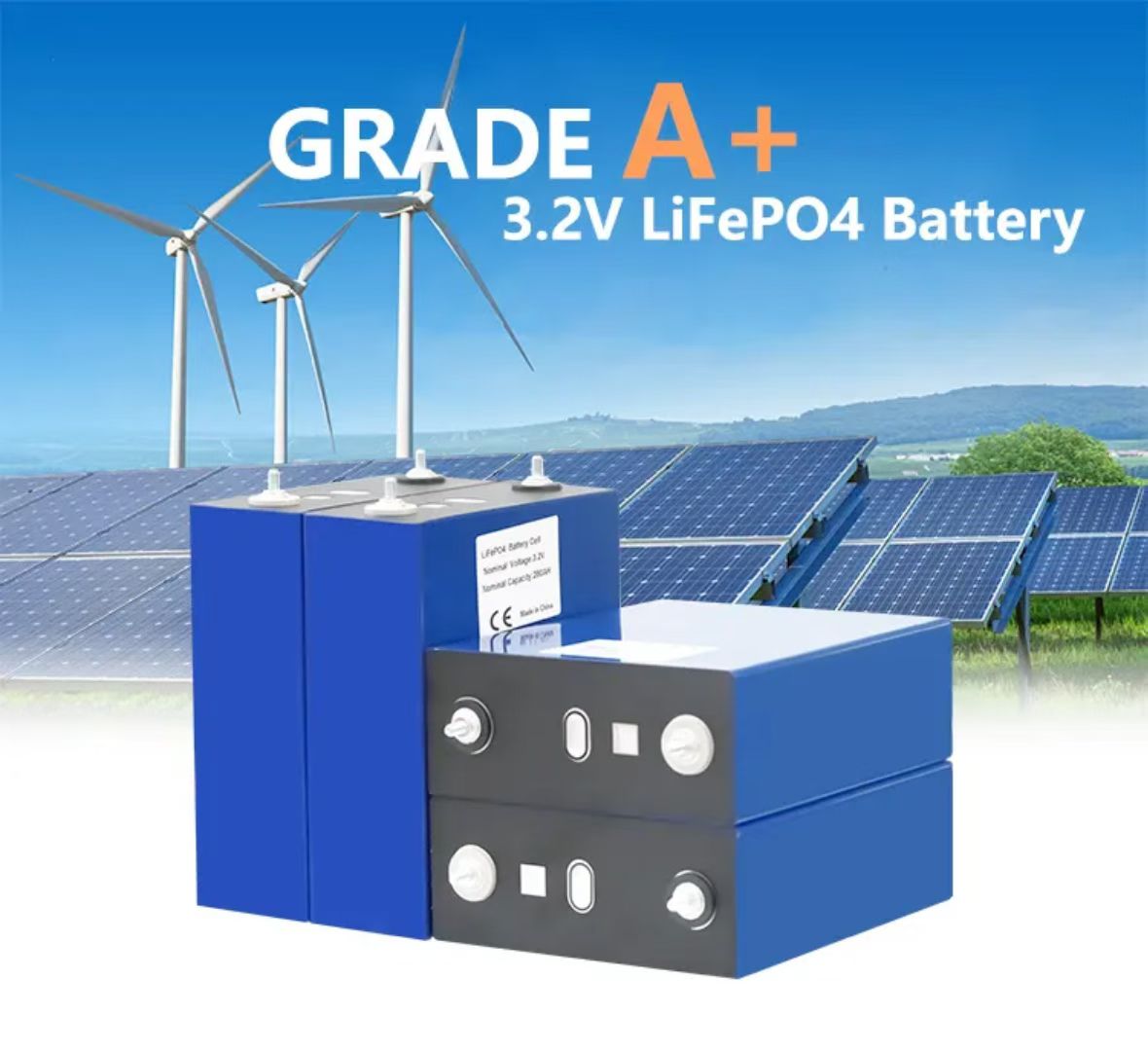
After several years of industry downturn, the price of lithium iron phosphate batteries began to rise in June 2025, and this upward trend has lasted for half a year. According to data from Shanghai Steel Network, as of mid-December 2025, the mainstream market price of power-type lithium iron phosphate batteries has risen to 41,200 yuan, with an increase of nearly 30% within half a year.This price increase is not an isolated phenomenon. From cathode materials to lithium salts, a cost-driven price increase wave is affecting the overall ecosystem of the lithium battery industry. Driven by favorable cost factors, the new energy industry chain has also initiated a "self-correction", and enterprises in niche markets such as large cylindrical batteries are taking advantage of the situation to accelerate their layout.The pressure accumulated over three years of industry downturn is gradually being released. The dual demand drivers of vehicle and energy storage are advancing simultaneously, and the market demand is being driven by two wheels.Some analysts point out that the current price increase of lithium iron phosphate batteries is an inevitable result of the deep adjustment of supply and demand after three years of industry downturn. Behind this, the dual demand drivers of new energy vehicles and energy storage, known as "vehicle and energy storage advancing simultaneously", play a crucial role. The pressure accumulated in the industry is gradually being released.From the end of 2022 to August 2025, the price of lithium iron phosphate materials experienced a deep correction, with a decline of more than 80%, putting the entire industry under profit pressure.The turning point of the industry began in June 2025. As the prices of upstream raw materials rose and downstream demand continued to recover, price increases gradually became an inevitable choice for enterprises to maintain normal operations. Recently, leading new energy enterprises such as BYD, CMM, BAK, and Tianan Group have successively issued "price increase notices", which will bring a new round of performance growth to enterprises within the industry.Behind the appearance of rising raw material costs is the strong support formed by the unexpected explosion of downstream market demand. This is also the core driving force behind the current price increase of lithium iron phosphate batteries - the two core tracks of new energy vehicles and energy storage.Compared with lead-acid batteries, lithium iron phosphate batteries have significant advantages in performance, economy, and environmental friendliness. Currently, they have become the mainstream technical route in the fields of new energy vehicles, light power, and energy storage systems, and have strong irreplaceability. Under the higher requirements of the new national standards, the market space for lithium iron phosphate batteries in the future is even more promising.In the field of power batteries, lithium iron phosphate has already established a dominant position. From January to November 2025, the sales volume of lithium iron phosphate power batteries in China increased by 66.9% year-on-year, and the market share rose to 72.8%. This growth trend is highly synchronized with the strong performance of the new energy vehicle market. During the same period, the production and sales of domestic new energy vehicles increased by more than 31% year-on-year, directly driving the demand for power batteries.The demand growth in the energy storage market is even more rapid, becoming another important engine driving the demand for lithium iron phosphate. GGII predicts that the shipment volume of energy storage lithium batteries in China will increase by more than 75% in 2025. It is worth noting that almost all energy storage batteries adopt the lithium iron phosphate technology route, which directly drives the demand for upstream materials. According to data from relevant associations, in the field of energy storage batteries, the proportion of lithium iron phosphate materials is as high as 99.9%, and it has become a key material foundation for the construction of new power systems.From "price war" to "value war": The "full production" heat of large cylindrical batteriesThe continuously recovering price trend is driving the upstream and terminal industries of batteries to gradually bid farewell to the "inward competition" of low-price competition and move towards a new stage of development centered on value.The industry-level collaborative breakthrough has been implemented first. In November 2025, representatives of seven mainstream lithium iron phosphate enterprises in China gathered in Beijing to discuss the future development direction of the industry. The China Association of Battery Industries clearly proposed at the meeting to rebuild the industry's pricing logic with the cost index as the core reference, avoiding vicious competition from the root and laying a solid foundation for the healthy development of the industry.This orientation has already brought positive signals to the operation of enterprises. Industry analysis generally holds that the dividends of this round of industry recovery will be more concentrated among leading enterprises with technological advantages, cost control capabilities, and high-quality customer resources.
Amid the dual demand explosion of "vehicle and energy storage", small and medium-sized battery systems are also following suit. Small power, portable energy storage, and household energy storage are all experiencing a new round of iterative growth. Take the veteran battery enterprise, Chongming New Energy, as an example. As a leading manufacturer in the cylindrical battery field, it recently issued a public notice on the price adjustment of its large cylindrical iron lithium batteries, clearly stating that the prices of all battery products will be raised starting from December 1, 2025. The driving force behind this price adjustment is the sustained high prosperity of its production capacity and orders - the capacity utilization rate of its Mianyang production base has long been at a high level, and its core product, the 32140 large cylindrical lithium iron phosphate battery, has achieved "full production and full sales". According to insiders close to the factory, the factory's order schedule is currently full, logistics operations are busy, and the automation efficiency of its production lines is at the forefront of the industry. These details directly confirm the strong market demand for large cylindrical batteries.
In the competition among multiple battery technology routes, the market attention on large cylindrical batteries is continuously rising. Industry data shows that the global demand for large cylindrical batteries has entered the GWh scale in 2025. Coupled with the continuous growth potential of small and medium-sized energy power systems, large cylindrical batteries will still have considerable growth space in the coming years and become an important force driving the high-quality development of the battery industry.
Facing the upward trend of material costs and the differentiation of market demands, enterprises with technological accumulation are building their competitiveness through product iteration and market positioning.
Take Chongming New Energy as an example. Its 32140 lithium iron phosphate all-ear cylindrical battery emphasizes cost-effectiveness and combines uniform heat dissipation and high safety. This battery can operate stably in a high-temperature range of 60°C, making it highly suitable for the small power and user energy storage markets in Southeast Asia and tropical regions. This technological advantage has directly translated into a market advantage. The company's products have been exported in bulk to markets such as the Middle East, Europe, and India, and it has ranked among the top in the industry in overseas competition.
Future Outlook: Parallel Development of Technological Diversification and Market Segmentation
Currently, the battery industry chain is undergoing a dual transformation of structural adjustment and technological iteration. Besides large cylindrical batteries, semi-solid, all-solid, and sodium-ion batteries and other multiple technology routes are also developing in parallel and making rapid breakthroughs.
For large cylindrical batteries, although they still face core challenges such as production efficiency and product consistency, they have unique advantages in energy density and structural stability, which are continuously expanding their application scenarios. They have deeply penetrated high-end electric vehicles, household energy storage, portable energy storage, and other fields, and are emerging in new tracks such as eVTOL. With the continuous advancement of material system upgrades and production process optimizations, large cylindrical batteries are expected to further unleash their market potential in areas such as light vehicles and energy storage systems and play a more crucial role.
The industry's prosperity is also undergoing a structural reshaping. Some securities analysts point out that the current price increase of lithium iron phosphate has a solid fundamental support, and the long-term development trend of the industry is positive. Other lithium battery enterprise insiders state that the current downstream demand remains strong, and the price adjustment triggered by cost transmission is essentially a rational return of industry value.
Standing at the new starting point of the industry's high-quality development, the core competitiveness of enterprises will no longer be solely determined by production capacity scale and cost control capabilities, but rather by the comprehensive competition of technological innovation, capital strength, and supply chain coordination capabilities.
How to Extend 18650 Cell Lifespan?
Sep. 22, 2026
What Are the Advantages of Lithium Marine Batteries?
Sep. 22, 2026