Industry News
Home > News > Industry News > Two-wheeler Lithium Battery Revolution: The Ultimate Solution for Safety and Durability
Lithium batteries, with their high energy density, lightweight design, and long cycle life, have become the core power source for electric bicycles, electric motorcycles, and other two-wheel vehicles. However, safety and long-term durability have always been the key challenges and core pursuits in the industry's development. This article will explore the challenges, progress made, and future development directions of lithium batteries in two-wheel vehicles in these two aspects.
I. Safety Reliability: The Lifeline That Cannot Be Compromised
Lithium batteries' safety incidents (such as fires and explosions) often result from "thermal runaway". Understanding and preventing thermal runaway is the core of safety:
1. The root causes of thermal runaway: Internal short circuit: Manufacturing defects (such as metal impurities), long-term use causing lithium dendrites to pierce the separator, mechanical abuse (impact, compression) leading to direct contact between positive and negative electrodes. External short circuit: Aging wiring, connector failure, improper modification causing accidental connection of the battery's positive and negative electrodes, resulting in a sudden large current and heat. Overcharge: BMS failure or inferior chargers causing the battery voltage to exceed the upper limit, triggering decomposition of positive electrode materials, oxidation of electrolyte, and heat release. Overdischarge: Deep discharge may cause copper foil dissolution, resulting in short circuits when recharged, when the negative electrode precipitates again. High temperature environment: High temperature accelerates side reactions, reducing material stability. External heat source: External fire source drying out the battery pack.
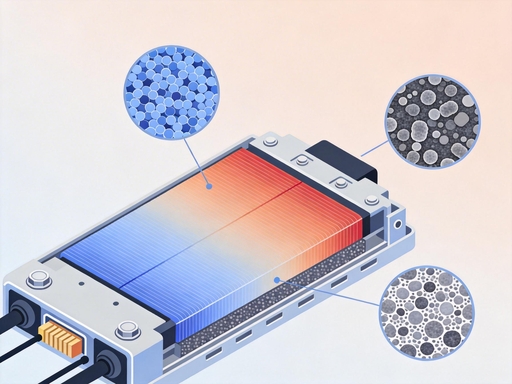
2. Key measures to enhance safety: Material innovation: High-stability cathode materials: Lithium iron phosphate (LFP) due to its excellent thermal stability and safety has become the mainstream choice (especially in electric vehicle applications); ternary materials (NCM/NCA) improve thermal stability through coating, doping modification. Reinforced separator: Using ceramic-coated separators (increasing heat resistance, preventing dendrites from penetrating), high-melting-point substrate separators. Flame-retardant/High-temperature-resistant electrolyte: Adding flame retardants, developing solid/semi-solid electrolytes (ultimate goal). Battery pack structure and process: Strengthening mechanical protection: Robust battery casings (metal/high-strength engineering plastics), internal buffer structure design to withstand impact and compression. Optimizing thermal management: Designing reasonable heat dissipation channels, introducing thermal conductive materials or simple air-cooling structures (for high-end models). Strict quality control: Automated production, high-standard clean workshops, multiple inspections (X-ray, HI-POT, EOL testing) to ensure consistency of cells and modules. Intelligent battery management system (BMS): The core guardian of safety Precise monitoring: Real-time monitoring of the voltage, temperature, and current of each string of cells. Multiple protections: Overcharge, overdischarge, overcurrent, short circuit, overtemperature protection (hardware + software dual guarantee). Active/passive balancing technology to reduce differences between cells, preventing single cells from overcharging or overdischarging. Fault diagnosis and warning: SOC/SOH estimation, abnormal state warning or reporting. Standards and regulations: Strictly adhering to national mandatory standards (such as GB 17761-2018 "Safety Technical Specifications for Electric Bicycles" with strict requirements for battery safety). 3C mandatory certification. Industry group standards and higher internal control standards of enterprises.
II. Long-term Durability: Assurance of Value and Experience
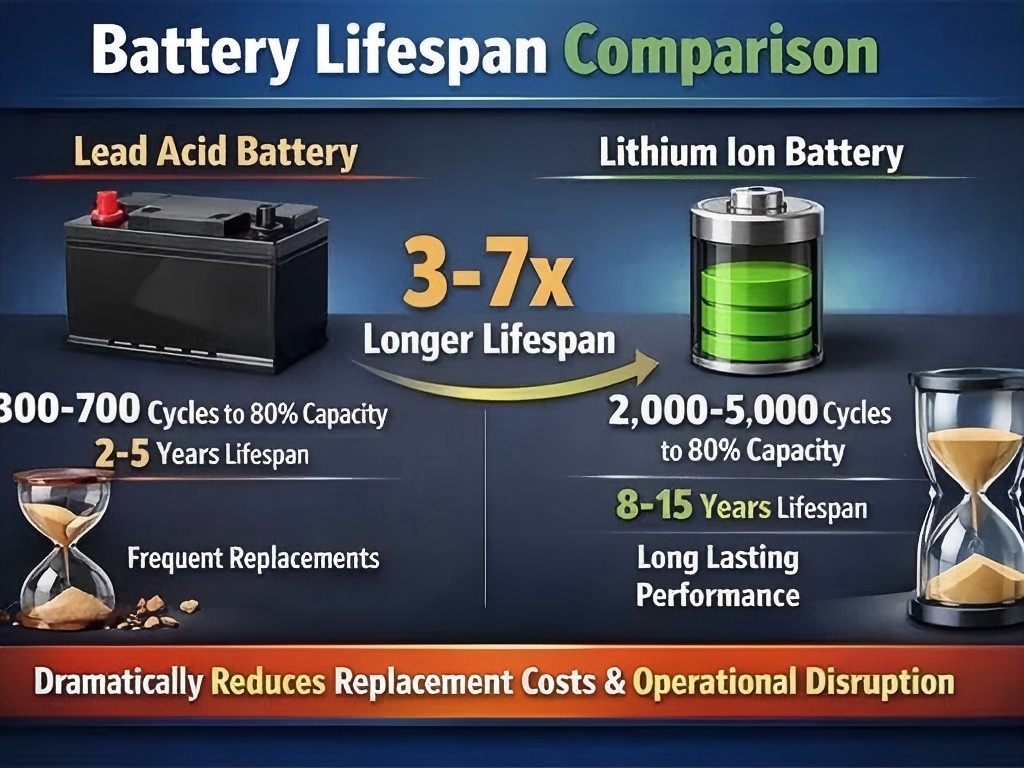
Durability directly relates to the user's usage cost and experience, with the core indicator being cycle life (the number of charge and discharge cycles when the capacity drops to 80%).
1. Key factors affecting lifespan: Material system itself: LFP batteries typically have a longer theoretical cycle life (2000-3000 times or more) than ternary batteries (800-1500 times or so). Operating conditions: Charge and discharge depth (DOD): Frequent deep charging and discharging (such as 0%-100%) cause greater loss than shallow charging and discharging (such as 30%-80%). Charging and Discharging Rate (C-Rate): High current fast charging and discharging accelerate aging. Temperature: High temperature (accelerating side reactions) and low temperature (risk of lithium precipitation) are both killers of battery lifespan. The optimal working temperature is usually between 15°C and 35°C. Storage state: Long-term full charge or empty charge storage accelerate capacity degradation. Battery consistency: Initial differences between battery cells or differences during use expand, leading to the shortcoming effect, and the overall lifespan is limited by the worst battery cell. BMS management strategy: Balance effect, charging and discharging cut-off voltage/current control, temperature protection threshold setting, etc.
2. Core path to enhance durability: Material optimization: Develop long-life anode and cathode materials (such as high-density, low-expansion materials), improve the stability of the electrolyte/electrode interface (SEI membrane stability). Advanced BMS algorithms: More accurate SOH estimation: Real-time assessment of battery health status. Intelligent charging and discharging strategy: Dynamically adjust charging current/cutoff voltage based on temperature and SOH; encourage users to perform shallow charging and discharging. Efficient balance management: Maximize the consistency of battery cells. Optimize usage habits and design: User side: Avoid overcharging/overdischarging, exposure to high temperatures during charging/charging, and long-term undercharge storage; use original chargers. Product design side: Provide reasonable charging modes (such as optional slow charging), battery insulation/heat dissipation design (for extreme climates), optimize the working range of the battery (such as limiting the SOC usage range to 20%-90% to extend lifespan).
III. Future path: Integration and breakthrough
Improving the safety and long-term durability of lithium batteries for two-wheel vehicles is a systematic project. In the future, it will focus on:
1. Solid-state batteries: One of the ultimate solutions. Use non-flammable solid electrolytes, fundamentally solving the risk of thermal runaway, and is expected to significantly increase energy density and cycle life. Currently, cost and technical maturity are the main challenges.
2. BMS intelligence and networking: Combine big data, AI algorithms to achieve more accurate state estimation, fault prediction, and adaptive management. Through the cloud platform for battery health monitoring and warnings.
3. More stringent regulations and full life cycle management: Improve the recycling system, establish a battery traceability system, and promote producer responsibility extension.
4. Continuous material iteration: Explore new anode and cathode materials (such as sodium-ion batteries, manganese iron phosphate lithium), more stable electrolyte systems.
5. Standardization and modularization: Promote standardized design of battery packs, facilitating replacement, maintenance, and secondary utilization.
IV. Suggestions for consumers
Recognize brands and certifications: Purchase well-known brands, products with 3C certification and in line with new national standards.
Original accessories: Use original chargers to avoid modifications.
Pay attention to charging: Avoid overcharging overnight, charging in high-temperature environments.
Reasonable storage: When not in use for a long time, maintain a medium charge level (~50%), and store in a cool and dry place.
Monitor abnormalities: If you find abnormal heating, bulging, or sudden drop in range of the battery, immediately stop using and send for inspection.
Safety and long-term durability are the eternal themes of lithium battery technology for two-wheel vehicles. Through multi-dimensional continuous efforts and innovation in material science, structural design, intelligent management, strict standards, and user awareness, especially the core role of BMS technology, the safety and lifespan of lithium batteries are constantly improving. Solid-state batteries and other cutting-edge technologies represent the future direction. Only by pursuing better performance and longer lifespan while ensuring safety can lithium batteries truly empower green and convenient two-wheel transportation, moving steadily forward. This road is full of challenges, but with the joint efforts of all parties in the industry, the prospects are bright.
When Lithium Batteries Are No Longer Wild
Aug. 17, 2026