Industry News
Home > News > Industry News > Cost drops by 50%! Semi-open energy storage lithium batteries simultaneously overcome the three major challenges of "safety, cost, and recycling"!Cost
Digital Energy Storage News: In today's era of profound restructuring in the global energy landscape, the surge of new energy and advancements in energy storage technology are converging into a transformative symphony. As the intermittency of wind and solar power constrains the progress of the energy revolution, an innovative breakthrough in energy storage technology is quietly unfolding in Chengdu.
On March 29, 2025, the 8th Tsinghua-Sichuan Technology Transfer Conference became a stage for technological innovation, where the world’s first intrinsically safe semi-open lithium-ion battery technology—jointly developed by the Tsinghua Sichuan Institute of Energy Internet and Haofengguang Energy Storage—made its stunning debut.
This disruptive technology, which simultaneously addresses the industry’s two biggest pain points—safety and economics—not only made it onto the list of ten major scientific and technological innovations announced that day but also achieved a seamless leap from laboratory to industrialization in Chengdu. This marks the official beginning of a new era for China’s energy storage technology—one defined by “intrinsic safety” and “long-term economic viability.”
Beneath the spotlight, lithium battery storage faces towering challenges: safety, cost, and recycling
As the global new-energy revolution gains momentum, lithium-ion batteries have firmly established themselves at the forefront of energy storage technology. By the end of 2024, the cumulative installed capacity of global new energy storage reached 165.2 GW, with lithium-ion batteries accounting for as much as 96.37%. In China, this figure exceeds 97%. Yet behind this impressive success lie three critical challenges quietly undermining their dominance.
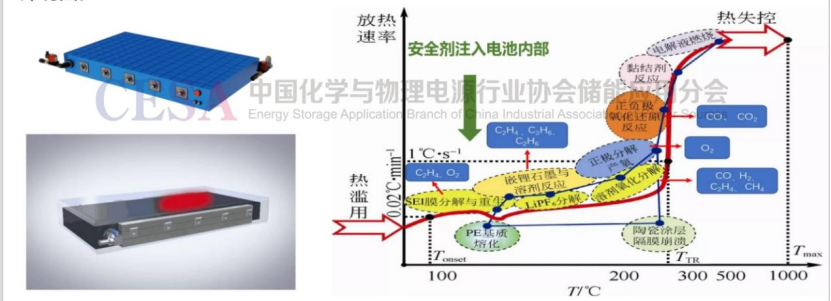
In terms of safety, traditional battery designs inherently lack intrinsic safety. Lithium dendrites—metallic "vines"—grow irreversibly during charge and discharge cycles. Their sharp crystalline structures can easily pierce through the separator, the "safety barrier," triggering a chain reaction of short circuits. Experimental data shows that once dendrites penetrate the separator, local temperatures can spike by 600°C within 0.1 seconds, causing electrolyte decomposition and gas generation, leading to a vicious cycle of swelling, rupture, and fire.
Although string architectures reduce fault propagation via electrical isolation and smart liquid cooling systems keep temperature differences under 3°C, these improvements remain reactive fixes. To eliminate risks at the root, researchers must develop solid-state electrolytes with intrinsic safety features—requiring ion conductivity above 1 mS/cm while maintaining interfacial resistance below 50 Ω·cm².
Cost challenges manifest across multiple dimensions. Despite a 85% reduction in levelized cost over the past decade, lithium batteries still cost 60% more than pumped hydro storage. Full lifecycle cost analysis reveals that cathode materials account for 32% of total costs, while electrolyte and separators contribute another 18%. Environmental costs associated with lithium mining have yet to be fully internalized. With global lithium resources concentrated in just 78% of regions (primarily South American salt flats and Australian mines), geopolitical risks cause annual price fluctuations exceeding 200%.
In recycling, a stalemate persists among competing technical approaches. While chemical methods recover up to 95% of valuable metals, strong-acid leaching generates fluorine-containing wastewater, costing 20,000 yuan per ton to treat. Physical methods achieve only 50% material recovery through crushing and sorting, though processing costs remain under 8,000 yuan per ton. Biological methods use microbial metabolism to extract lithium, but current efficiency falls below 60%, with cultivation cycles lasting up to 30 days.
Breaking through cost barriers and building a green recycling ecosystem
After twelve years of relentless R&D, the Tsinghua Sichuan Institute and Haofengguang Energy Storage team has achieved three groundbreaking advances, establishing an innovative system covering the entire value chain—from research and development to manufacturing and recycling.
On the safety front, the team has broken away from conventional fully sealed lithium battery structures, introducing an innovative "semi-open" architecture. This design incorporates dual protection mechanisms: a smart safety agent reservoir and micro-porous structure. Phase-change materials instantly absorb excess heat, while an inert gas layer isolates oxygen, effectively blocking thermal runaway chain reactions. This technology has become the world's first "intrinsically safe" lithium battery energy storage solution certified by both the Ministry of Industry and Information Technology and the National Fire Rescue Administration. It eliminates safety risks during transportation through a solid-liquid separation design. To address the lifespan limitations of energy storage systems, the team developed an in-situ repair and life-extension technology that dynamically replaces electrolyte and repairs the negative electrode SEI film via a patented piping system. Combined with Shanghai University’s self-healing SEI membrane technology, this approach extends battery pack cycle life from 8 years to 15–25 years—perfectly aligning with the full lifecycle of photovoltaic systems.
In terms of economics, the system’s levelized cost of storage drops below 0.2 yuan per kWh, reducing costs by over 50% compared to conventional solutions, and for the first time surpassing pumped hydro storage in total lifecycle cost. In green recycling, it breaks through traditional bottlenecks: its water-washing disassembly process achieves a 98% recovery rate for cathode materials, reduces wastewater treatment costs by 70%, and cuts carbon emissions by 65%, forming a closed-loop “production–use–recycling–reproduction” system.
With an energy density of 130–160 Wh/kg, the technology combines four key advantages—long lifespan, high safety, low cost, and ease of recycling—and delivers continuous discharge capability spanning 4 to 10 hours, precisely meeting the demands of renewable energy integration and grid peak shaving. After progressing from lab-scale trials to pilot production, the world’s first demonstration line was completed in Chengdu in 2023. The first batch of products passed intrinsic safety testing in 2024, marking a critical leap from laboratory research to large-scale manufacturing.
A safety revolution is redefining technological paradigms, with intrinsic safety leading industrial upgrading. Since its launch, the technology has generated strong market response and quickly established demonstration collaborations with Southern Power Grid and the National Energy Group. In the State Energy Group Yongfu 100MW/200MWh shared energy storage project, semi-open lithium-ion batteries outperformed traditional lithium iron phosphate systems due to their long cycle life and low cost, enabling more efficient matching with the volatility of renewable energy sources. The technology won the “2025 China Energy Storage Industry Best Long-Duration Storage Innovation Award,” providing a comprehensive solution for sustainable industry development.
Its disruptive innovation is reshaping the global energy storage landscape. On the safety front, while conventional sealed batteries resemble “cans,” the semi-open lithium-ion battery functions as a “breathing living organism.” Through integrated shell piping and safety systems, combined with porous, ultra-thick electrodes, it solves the safety challenges of large-capacity, long-duration storage, enabling intelligent conversion between electrical and thermal energy in grid peak-shaving applications.
On the cost side, the levelized cost of storage is 50% lower than industry averages. If widely adopted, it could fundamentally reshape the market, with international cooperation already underway to expand into markets such as South Korea and the Middle East.
Environmentally, the revolutionary water-washing disassembly process enables direct reuse of recycled materials with a residual value reaching 20%. When deployed in photovoltaic and wind farms, this energy storage system smooths fluctuations in renewable output, improves integration efficiency, and supports deep decarbonization of power systems.
Adaptable across multiple renewable energy sectors, the future of semi-open lithium-ion energy storage looks promising. In this sweeping energy revolution, the semi-open lithium-ion battery technology shines like a brilliant new star, illuminating the path forward for the energy storage industry. It is not merely a technical breakthrough but also a catalyst for structural transformation in the energy sector, driving disruptive change across transportation, industry, and the entire power system.
In transportation, the intrinsically safe design of semi-open lithium-ion batteries ends the nightmare of thermal runaway in electric vehicles, making every journey safer. Its long cycle life significantly reduces vehicle operating costs, ushering in a new era of green mobility.
In vehicle-to-grid (V2G) scenarios, autonomous electric vehicles transform into “mobile power stations,” intelligently storing energy during off-peak hours and feeding electricity back into the grid, effectively stabilizing renewable energy integration and achieving highly efficient energy utilization. At the industrial application level, semi-open energy storage lithium-ion battery technology has also demonstrated strong adaptability. It provides reliable power support for high-energy-consuming industries such as steel smelting and petrochemicals, with excellent deep charge-discharge performance that perfectly matches the intermittent nature of renewable energy supply. In a real-world test at a chemical park in Jiangsu, this technology successfully reduced the peak-to-valley load difference for enterprises by 35%, cut fossil fuel consumption by 30%, and achieved annual carbon emissions reductions exceeding 10,000 tons—providing robust momentum for industrial green transformation.
The value of semi-open energy storage lithium-ion battery technology lies even more profoundly in its alignment with China's "dual carbon" strategy. By enhancing grid flexibility and improving the integration efficiency of new energy sources, it delivers core driving force for the low-carbon transition of the power system.
As large-scale demonstration projects for grid peak shaving and wind/solar power integration are being rolled out globally, the world’s energy storage technology landscape is undergoing disruptive transformation. Safety, cost-efficiency, and environmental sustainability converge into a triple revolution, and semi-open energy storage lithium-ion batteries, with their four key advantages—original innovation, inherent safety, economic efficiency, and recyclability—are ushering in a new era for the energy storage industry.
Looking ahead, semi-open energy storage lithium-ion battery technology will continue to drive optimization and upgrading of the energy structure, helping build a safer, more economical, and more sustainable energy future.