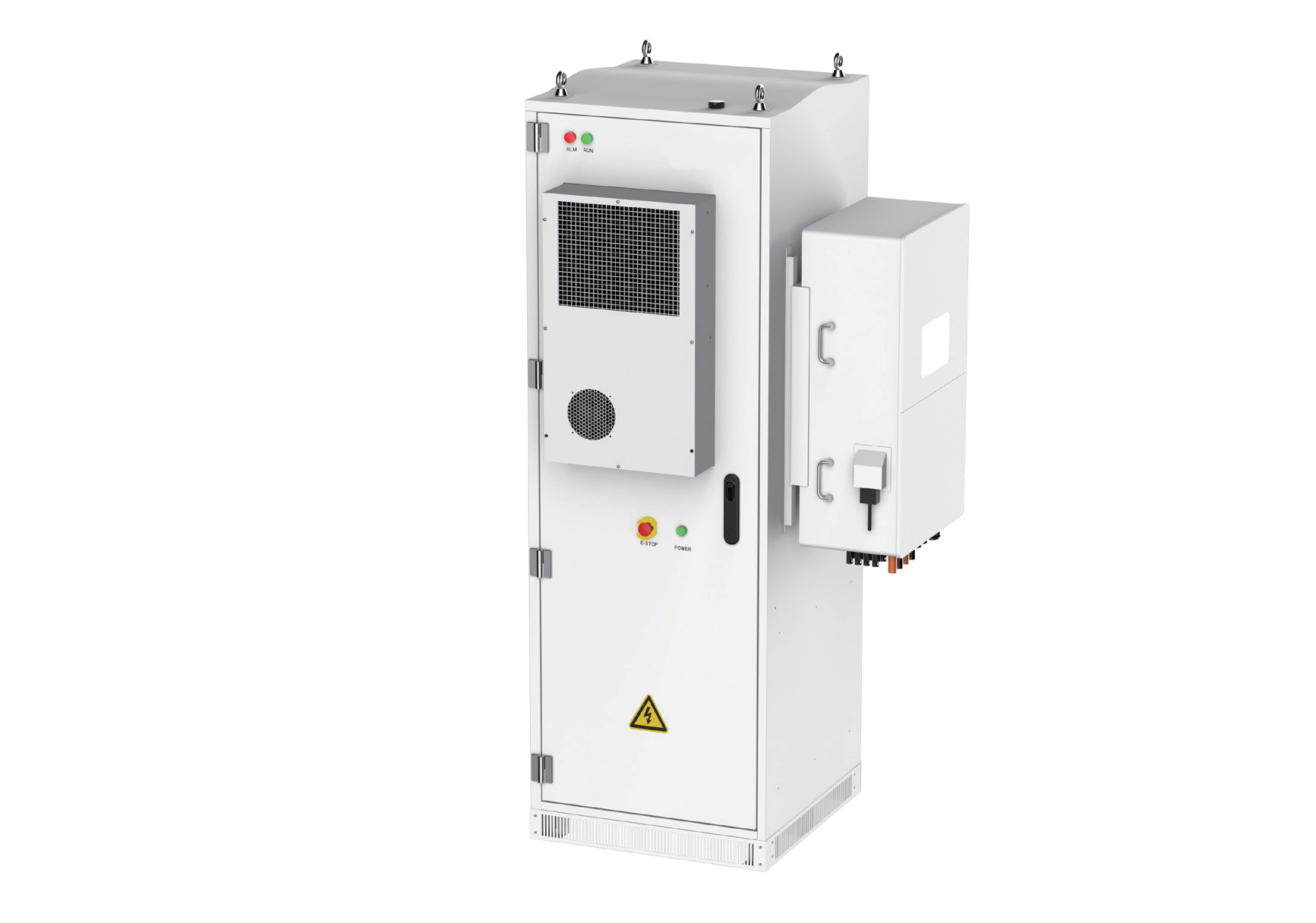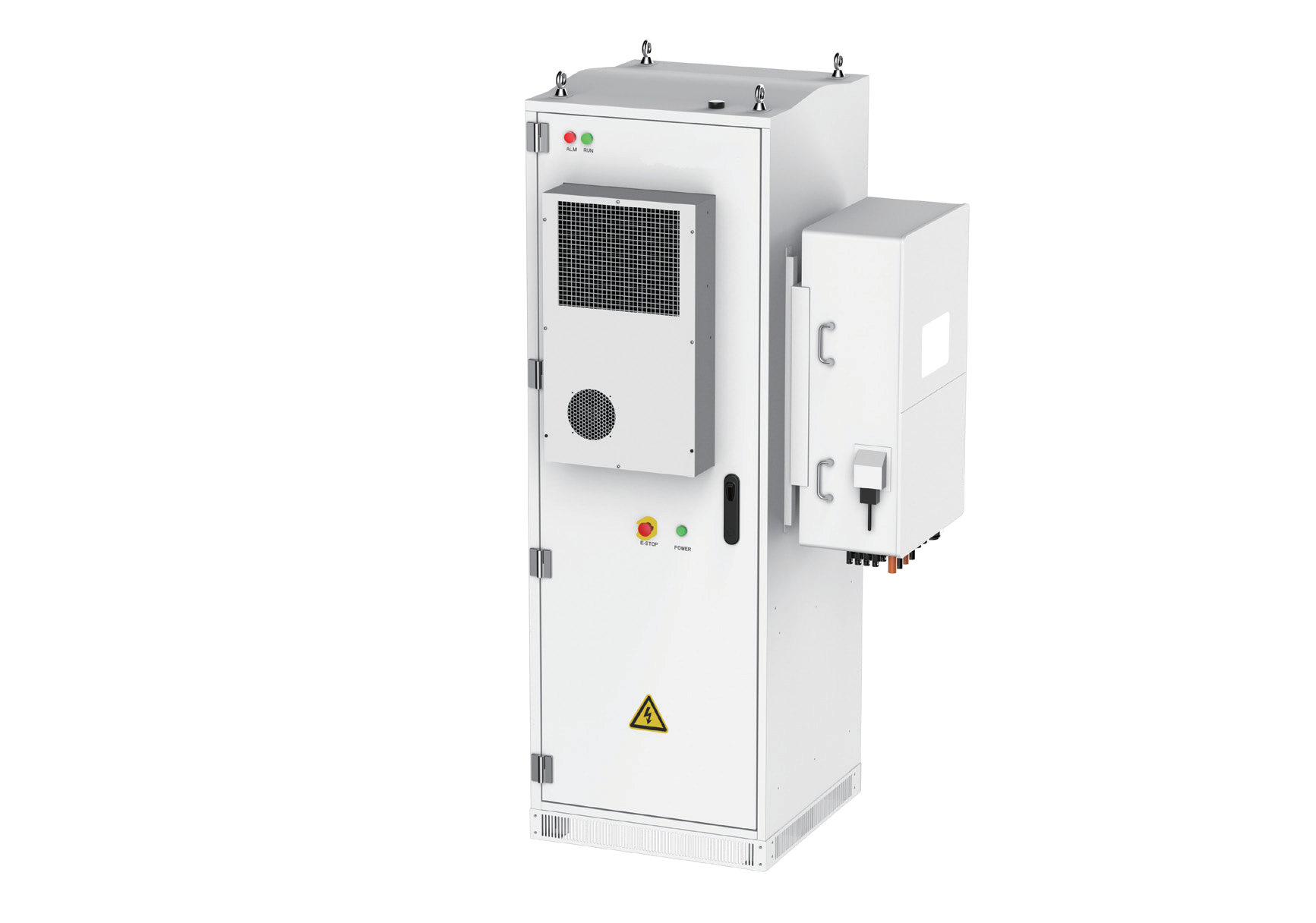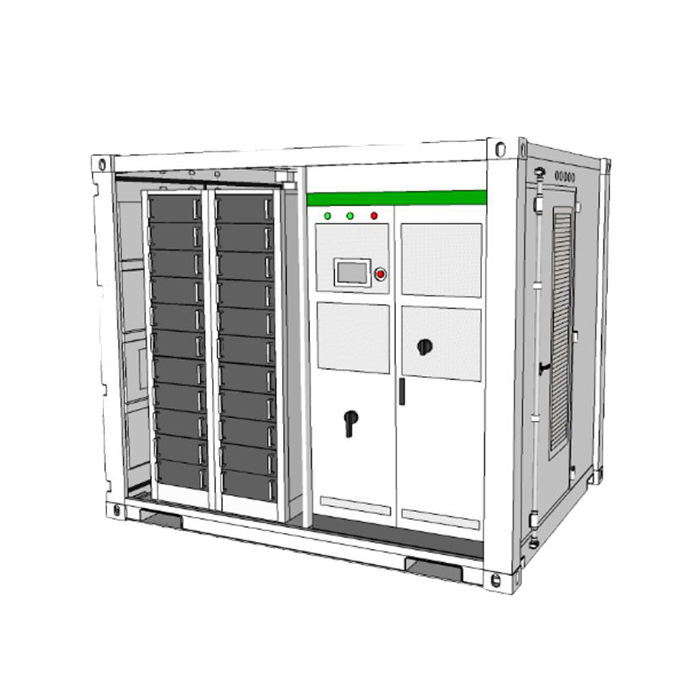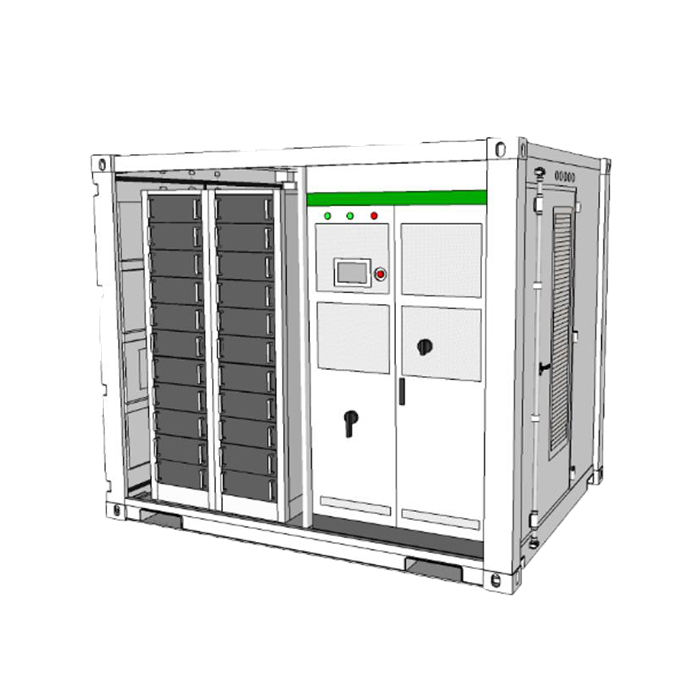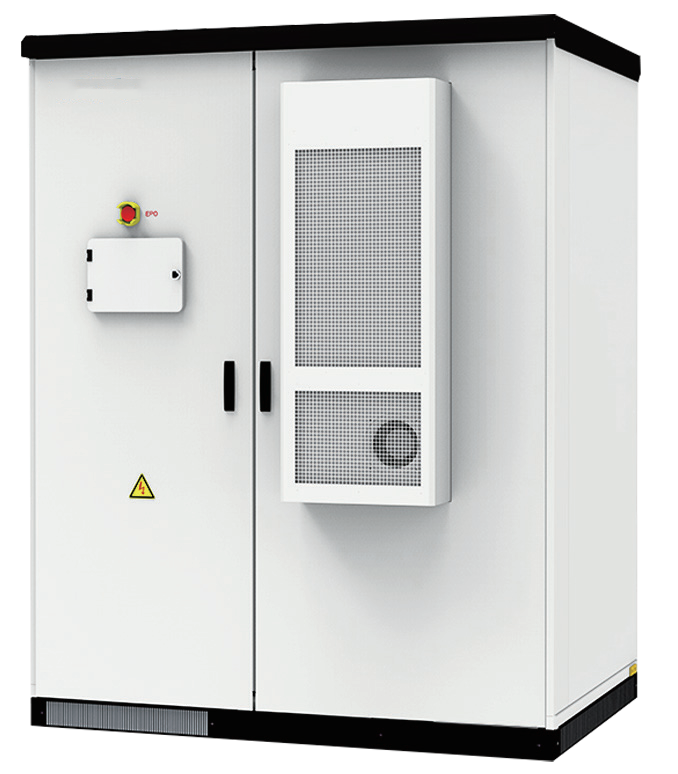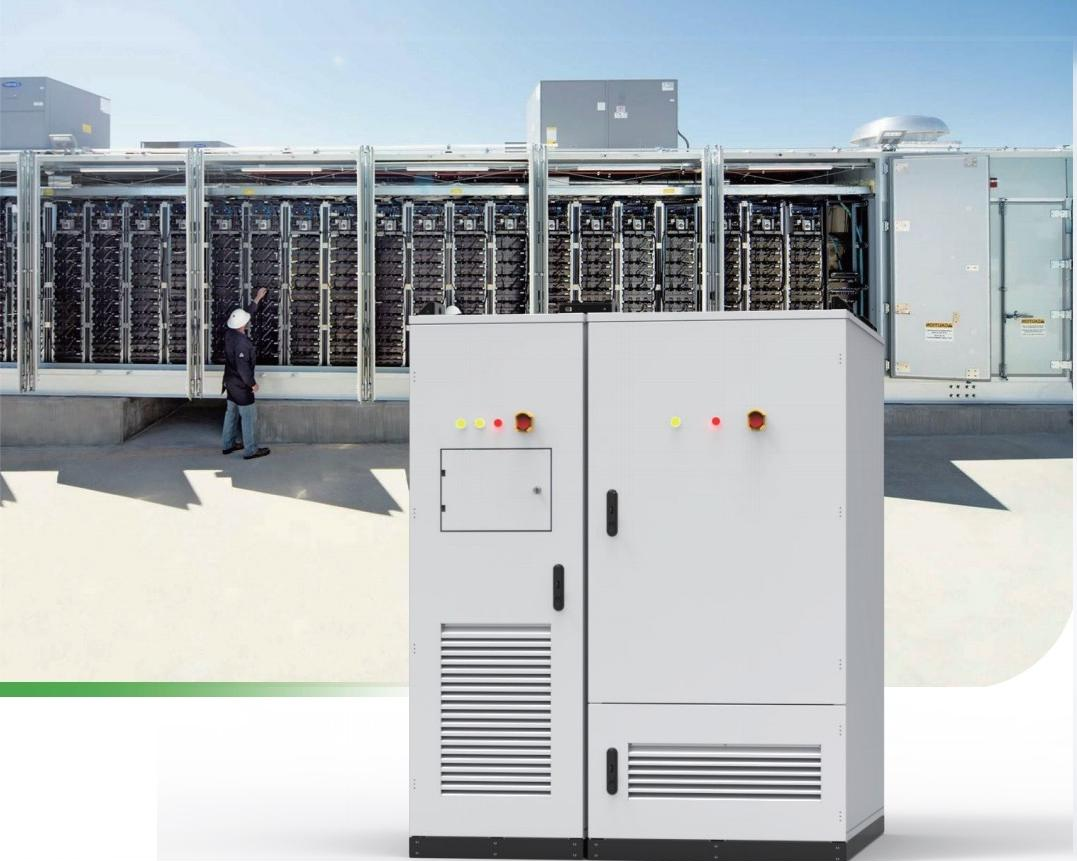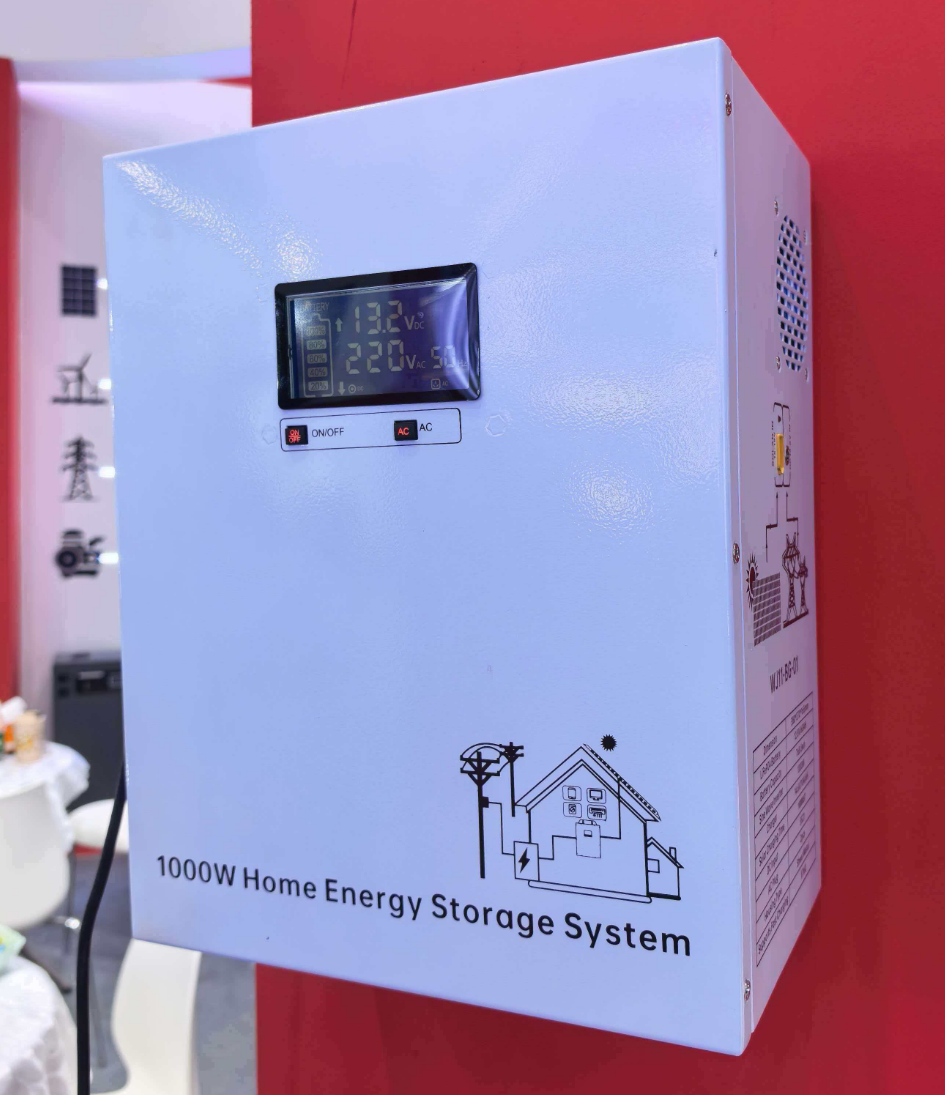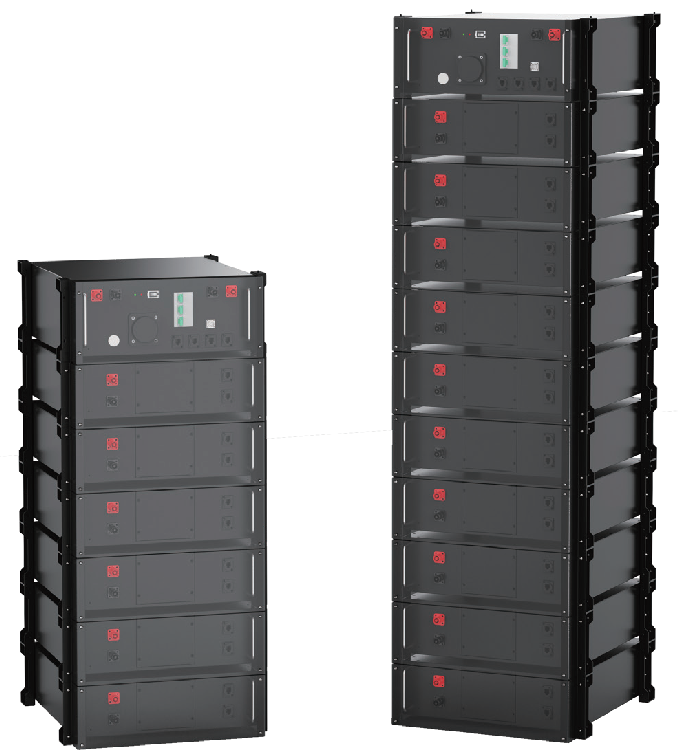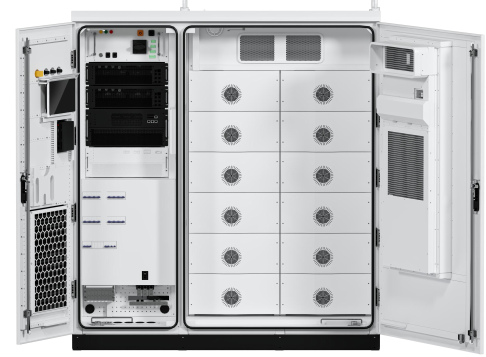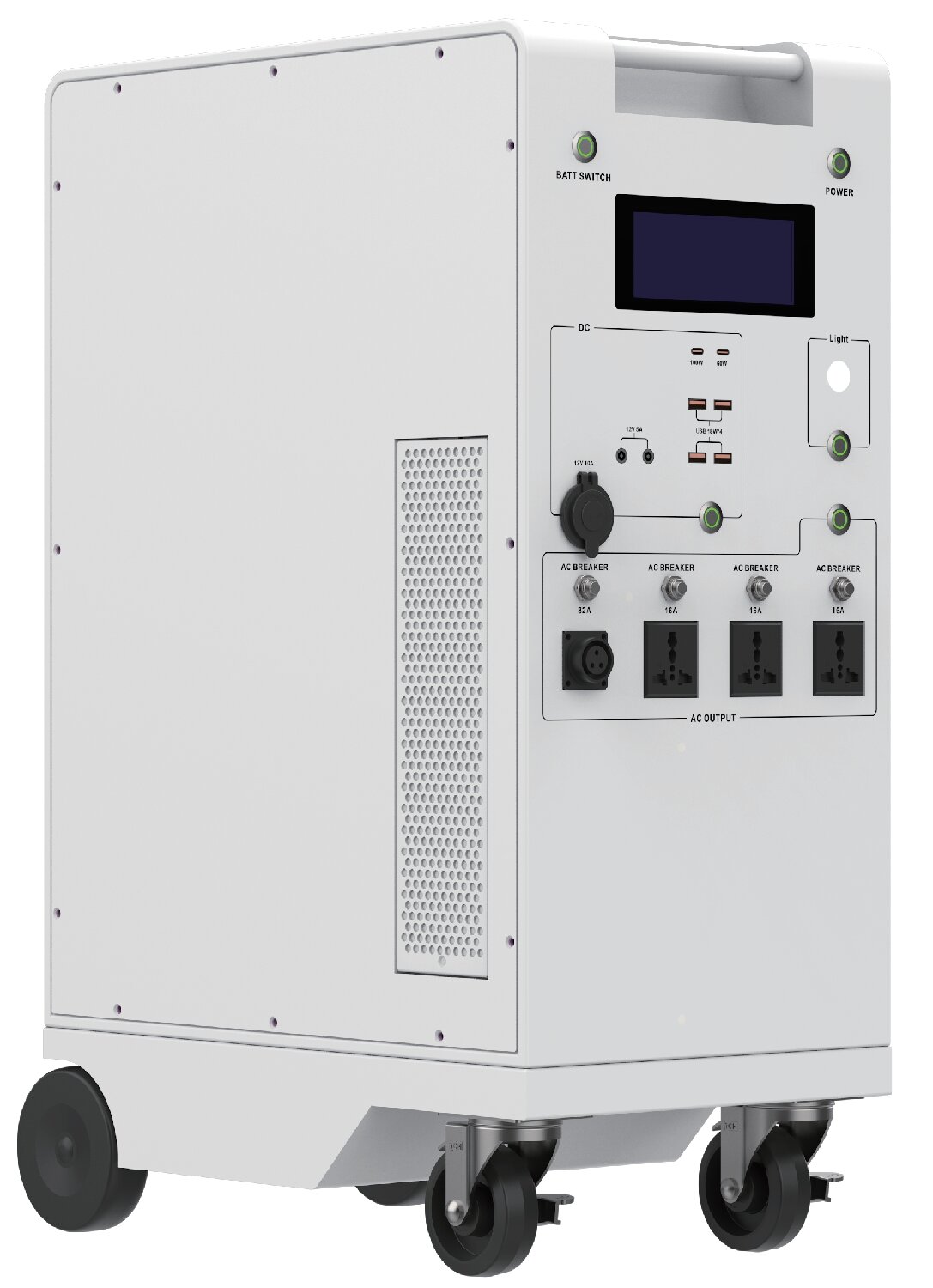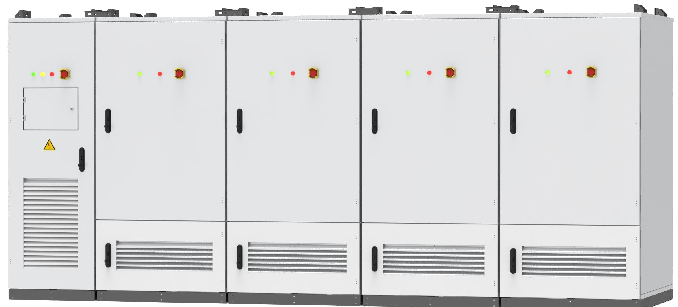
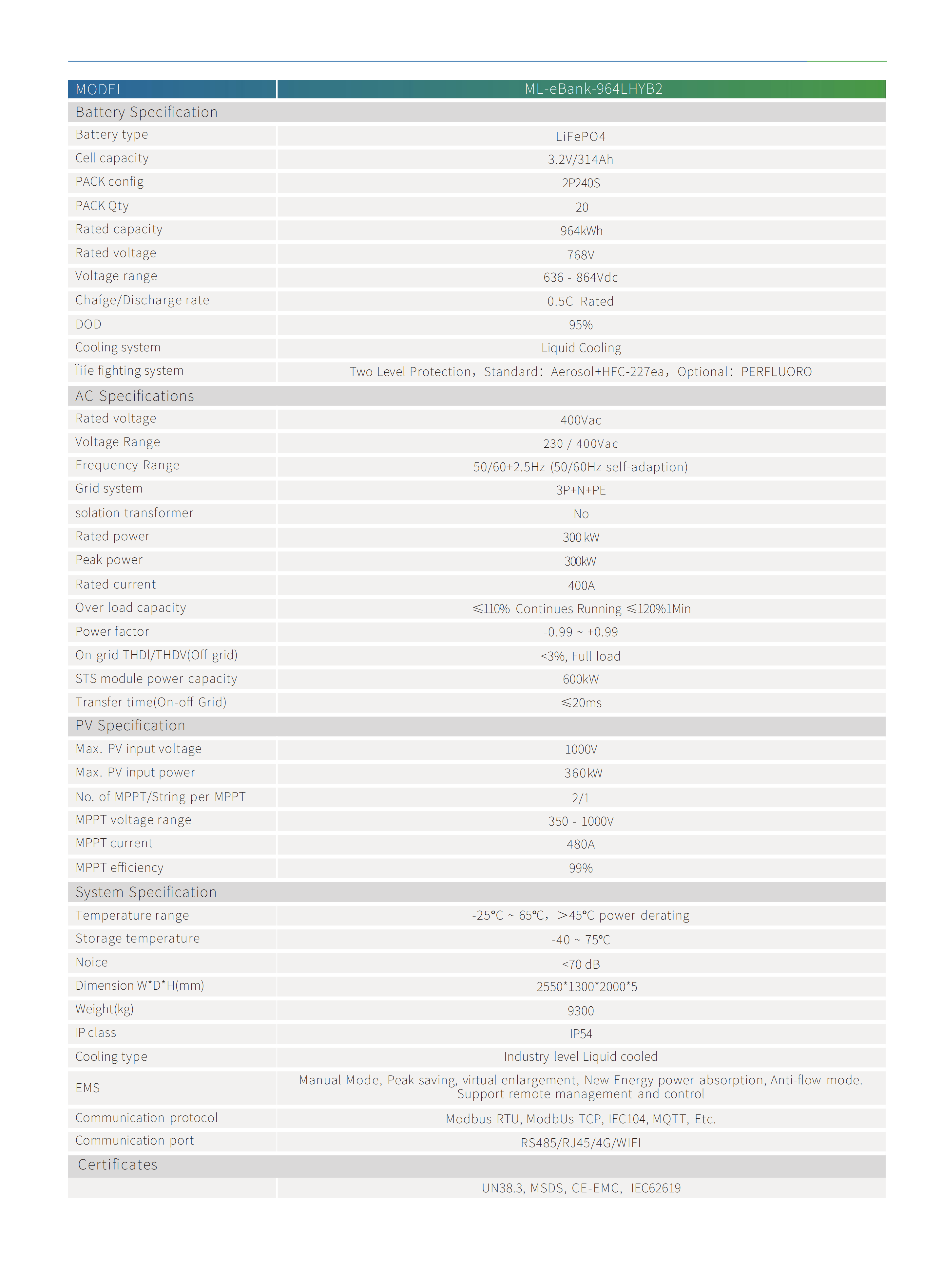
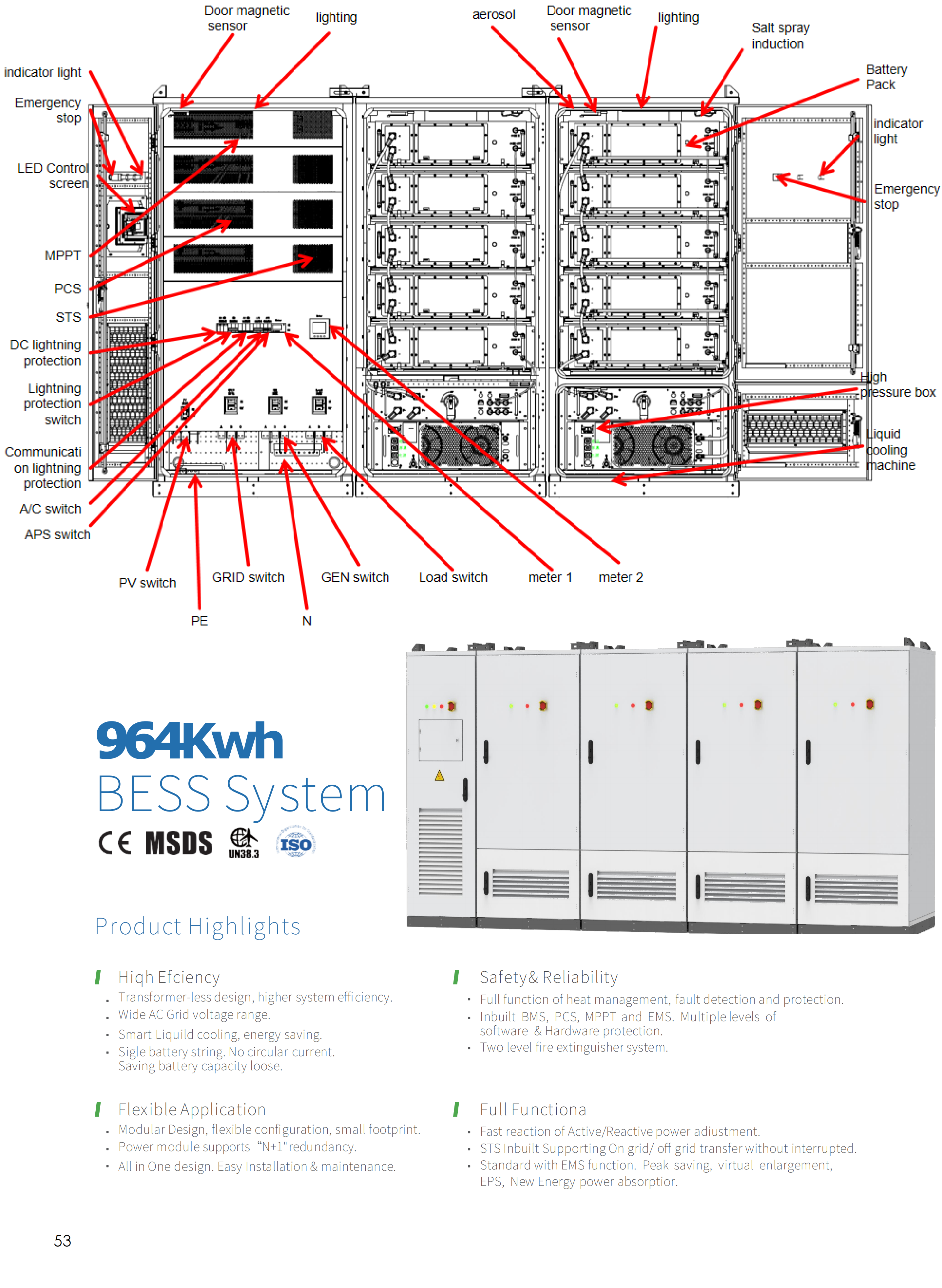
Model No.:ML-eBank-964LHYB2
rated voltage: 768V
rated capacity:964kWh
Maximum PV input power:360kW
Maximum PV input voltage :1000V
Size (width * depth * height):2550*1300*2000*5
IP class:IP54
Storage temperature:-40~75℃
Product Description
I. Core Advantages
1.For battery factories: The modular design can flexibly adapt to mainstream lithium iron phosphate cells (including 500Ah + large cells), without the need for large-scale line modification, allowing for batch assembly and compatibility with large-scale production; it is also compatible with the existing supply chain of the factory, shortening the production cycle, reducing losses, and minimizing inventory backlog of cells. It can also leverage product compliance qualifications to quickly enter domestic and international markets, improving capacity utilization.
2.For traders: The 964Kwh capacity precisely covers core scenarios of medium and large-sized industrial and commercial enterprises. It can be deployed independently, expanded in parallel, and does not require multiple specifications of products, reducing inventory pressure; the product has a cycle life of 6000 times @80% DoD, conversion efficiency ≥ 95%, low after-sales costs, and complete compliance qualifications (CE/FCC/ROHS, etc.), allowing for direct export, expanding profit channels, and simultaneously providing high cost-effectiveness to make the terminal pricing more competitive, increasing order conversion rates.
Common Advantages: High-quality cells + intelligent BMS/EMS dual management system, strong stability and low energy consumption; IP54 protection level is suitable for complex environments, reducing quality disputes and ensuring long-term benefits for both parties.
II. Application Scenarios
(1) Scenarios for battery factories
Self-use energy storage for factories: Reduce production electricity costs by smoothing peaks and filling valleys, use as an emergency backup power source to avoid production interruptions caused by power outages, and can be paired with photovoltaic systems to achieve self-generation and self-storage of surplus electricity, further controlling costs.
Production verification and iteration: As a testing carrier for cell and module performance, it helps factories optimize production processes, adapt to market technology iteration requirements, and enhance their own product competitiveness.
(2) Scenarios for traders
1.Peak-valley shaving for industrial and commercial enterprises: Targeted at industrial and commercial areas in the Yangtze River Delta and Pearl River Delta, suitable for manufacturing factories, industrial parks, and large supermarkets. Through peak-valley arbitrage, it helps end customers reduce costs. This is a core profit scenario.
2.New energy backup storage: Provide backup storage for distributed photovoltaic and small-scale wind power, addressing unstable output issues, suitable for farms, remote area power stations, etc. The market demand is strong.
3.Emergency backup power source: Targeted at hospitals, data centers, battery factories, etc., replacing traditional diesel generators, environmentally friendly and efficient, meeting emergency power supply and temporary expansion needs, and easily appealing to end users.
4.Grid auxiliary services: Participate in grid frequency regulation and peak shaving, suitable for grid-side projects. It is suitable for traders with grid resources to expand business and increase profit paths.
III. Solution Capabilities
(1) Solutions for battery factories
1.Production adaptation: Provide modular production guidance, optimize assembly processes, adapt to existing production lines and supply chains, without large-scale line modification, and provide technical training to improve production efficiency and qualification rate.
2.Quality control: Output full-process quality control standards, dispatch technicians for on-site guidance, help establish a standardized quality control system, ensure products meet compliance requirements, and reduce quality risks.
3.Capacity optimization: Based on market demand, provide capacity planning suggestions, assist in connecting downstream trading resources, reduce capacity and inventory, and optimize capital turnover.
(2) Solutions for traders
1.Product customization: Support OEM/ODM, based on target markets (domestic/foreign), end-user demands, customize appearance, functions, and compliance adaptation, support small-batch trial orders, and reduce inventory risks.
2.Full-chain support: Provide promotional materials, case materials, ROI calculation templates, assist in market promotion; professional technical teams provide customer consultation, on-site investigation, and solution design to fill technical gaps.
3.Logistics and after-sales: Integrate global logistics resources, provide efficient distribution and customs clearance services; global after-sales network responds 7×24 hours, reducing after-sales costs and avoiding export risks.
4.Channel protection: Implement regional exclusive agency, provide reasonable price systems and rebate policies, protect channel rights, and help achieve long-term profitability.
IV. Company Strengths Research and Development Capabilities: The professional team focuses on core technologies such as BMS, EMS, and PCS. They independently develop BMS, which can quickly adapt to different components. They keep up with industry trends such as large cells and liquid cooling, ensuring product competitiveness.
Production Capacity: Standardized production bases and automated production lines ensure a monthly production capacity of ≥ 50 MWh. This can meet the requirements of contract manufacturing and batch orders. During peak seasons, no orders are left unfulfilled, and the product qualification rate is ≥ 99.8%.
Supply Chain Advantages: Long-term cooperation with leading cell manufacturers such as CATL and BYD ensures stable cell supply and competitive prices. Core components are independently produced, allowing for flexible adaptation to customized needs.
Compliance and Cases: The products have passed a full range of compliance certifications, and the certificates can be traced. With deep industry experience, the products are exported globally and have mature overseas cases such as Dutch farms, providing sufficient backing.
Flexible Cooperation: For battery factories, we offer contract manufacturing and joint production models. For traders, we provide wholesale, agency, OEM/ODM models, and can customize personalized cooperation plans to ensure both parties' profit margins.